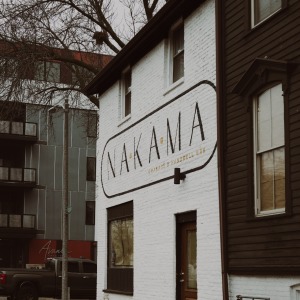
It’s full steam ahead at the site of Nakama, Milwaukee’s newest omakase restaurant planned for the former Interval Coffee space on the city’s Lower East Side.
The restaurant is slated to open in time for Valentine’s Day.
In the interim, final construction and aesthetic changes are wrapping up at the space at 1600 N. Jackson St., following an eight month total remodel.
Nakama’s executive chef and partial owner Jason Morimoto will close out his nearly 15 years as executive chef at Milwaukee sushi restaurant Screaming Tuna at the end of January, two weeks before the omakase spot will seats its first guests.
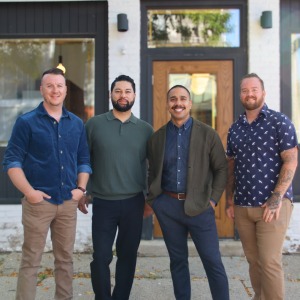
Morimoto, also the winner of Iron Chef Masaharu Morimoto’s Sushi Master season two, joined Nakama’s three other owners Cristian Vega, and co-owners of Lost Whale in Bay View Daniel Beres and Tripper Duval, in what was originally expected to be a “turnkey renovation,” Vega said. Though it became much more involved when construction began in June 2025.
“We (started saying) maybe we should do this, maybe we should do this… then it just snowballed into, ‘Why don’t we completely change everything?’” Vega said.
Thus, construction began on what will be the city’s second omakase restaurant, in addition to 1033 Omakase in Bay View.
“We wanted to be the first in Wisconsin, but they beat us to the punch, so we’ll be the second,” Vega said.
Nakama will be a “warm, inviting, almost traditional sushi bar,” Morimoto said. The restaurant will offer two kinds of service – omakase and traditional dining in the upstairs loft. The omakase bar will accommodate 10 to 11 guests who will watch as Morimoto and the Nakama team make open-faced style hand rolls, sashimi and nigiri. The upstairs loft will accommodate, at most, 14 guests and will offer more traditional dining service, with a la carte menu items similar to those served at the omakase bar. Nakama will seat two omakase services per evening.
The ownership team defines Nakama as refined and elevated. The restaurant’s upscale cuisine and ingredients will be juxtaposed by a collection of vinyl records played throughout service.
“It’s not meant to be stuffy or too proper,” Vega said. “We take food seriously. We take our jobs seriously. We take hosting seriously. But, we don’t take ourselves too seriously.”
Vega declined to disclose the cost of the remodel but mentioned that construction costs were about 50% more than anticipated.
The idea for Nakama has been years in the making, despite the speed at which the project began.
Vega and Morimoto began working together nearly 15 years ago at Screaming Tuna. At the time, Vega was working on the management side of the business and was looking to hire another sushi chef. Morimoto, who is a self-taught sushi chef, was brought onboard and quickly rose to become executive chef.
Several years later as the restaurant grew, Morimoto began working almost exclusively at Screaming Tuna’s Mequon Public Market location. The two worked in tandem and often brainstormed ways to reinvigorate the restaurant’s offerings and service.
Then came the COVID-19 pandemic and everything slowed, allowing Morimoto and Vega to conceptualize new growth plans. Vega, still working side by side with Morimoto in Mequon, thought “we could be doing more,” he said.
A short research and development trip to Chicago featuring an omakase dinner helped spark the idea to introduce omakase dining to Screaming Tuna’s business. For months following, Morimoto and Vega led a successful omakase series at Screaming Tuna’s Mequon location, proving interest from the community in that style of dining.
The omakase series plus Morimoto’s appearance and winning notoriety on Sushi Master became the blueprint and catalyst for Nakama and its plan of operation.
With a rough business plan, Morimoto and Vega sat at Interval Coffee in early 2025, admiring the architecture, noting how it would be fitting for omakase-style dining. In late spring shortly after Sushi Master aired, Interval Coffee announced it would close both of its locations following complaints from its workers that they had not been paid.
Morimoto and Vega acted fast as the space soon became a highly sought-after piece of real estate. The duo tapped a friend in the commercial real estate industry and a month later, signed a lease to rent the space and began renovations.
“We wake up every day and we’re excited about doing what isn’t being done,” Vega said. “This isn’t just another restaurant to us. God bless all the restaurants out there, but this is something different. This is something really special.”