Fourteen years ago, John Litchford, then a brand-new lieutenant with the Milwaukee Fire Department, suffered an injury common for firefighters: a slight tear in his knee.
Instead of seeking care for his injury, Litchford worked through the chronic pain for nearly five years.
“We knew it was a small tear. However, it was just something I was willing to deal with,” said Litchford, who is now South Milwaukee’s fire chief and director of emergency management. “At the time, I had two young kids and I didn’t want to give up the four months (of work).”
It was later in his 25-year tenure with the Milwaukee Fire Department that Litchford learned about Ready Rebound, a Milwaukee-based startup created to help first responders and essential workers access specialized health care at an expedited pace.
Ready Rebound’s 24/7 concierge injury navigation hotline gives first responders and their families immediate access to a roster of nearly 1,000 orthopedic specialists. Through a unique partnership with these physicians, Ready Rebound can get its members an appointment within 48 hours, a response time the startup says helps individuals recover and return to work up to three months faster.
In Litchford’s case, once he reported his long-untreated injury to Ready Rebound, it took less than seven days to see a physician and schedule a surgery for his knee.
That’s the primary mission of Ready Rebound – helping first responders recover quickly while providing a more personable health care experience. Its services cover on- and off-duty injuries, immediate family, department administration and retirees.
Since launching via a pilot program with the Milwaukee Fire Department in 2014, Ready Rebound has grown to partner with more than 400 public safety and public works departments across 20 states. The company’s annual revenue is approaching $10 million, and last year its new business bookings grew 400%, according to company leadership.
Founder Luis Rivera, a Chicago native, is familiar with the amount of work and time it takes to recover from a major injury.
After attending Marquette University, where he studied to become a certified athletic trainer and physical therapist, Rivera spent nine years working for Major League Baseball and Arizona State University.
He helped athletes navigate the healing process in an efficient and personalized way after they experienced an injury.
When one of his college friends became the health and safety officer for the Milwaukee Fire Department, Rivera realized there were similarities between the injuries first responders and athletes experience.
“Their chief medical officer asked me, ‘How come in baseball, someone could get injured on January 1, and you have them back on the field by June or July, while we have firefighters with the same type of injuries?’” Rivera said. “We think our folks are athletes as well, but it’s taking our guys 18 months, sometimes longer, to get back on the field.”
While municipalities were turning to the right doctors for health care, Rivera discovered the process of accessing that care was a major problem. First responders waiting for authorization from their respective municipalities to receive care were experiencing substantial wait times.
“What we ended up doing is sucking the oxygen out of the system,” said Rivera. “By doing so, it started compressing time for the city and first responders, and time is money.”
He wanted to replicate the health care experience professional athletes receive and provide that to first responders. In professional sports, athletes have trainers and physical therapists who serve as personal concierges, Rivera explained. They never have to worry about finding the right provider or scheduling appointments.
That’s essentially what Ready Rebound is partnering with municipalities across the country to do for first responders. The startup approaches physicians to work exclusively with its municipal partners.
“If you choose to work with the NBA, you’re on call all the time,” said Rivera. “I went to these doctors and said, ‘Hey, that same thing you’re doing for the athletes, would you be willing to do that for your local first responders?’ Well, of course the answer is yes.”
Ready Rebound does not require health care providers to reduce their fee schedule. The company makes money by charging municipalities for a subscription to use its software services.
The Ready Rebound team at an all-employee mid-year meeting in Milwaukee in August. The company partnered with Fire Department Coffee to co-host a community event to thank local first responders. Credit: Ready Rebound
The perfect match
Rivera is the first to admit that while he knew he had a great idea, he needed help fleshing out the operational side of Ready Rebound.
“We knew we had a business model, but it really didn’t have a lot of structure around it,” he said.
It was the company’s current board chairman, Darren Jackson, who made the strategic introduction of Rivera and David Reeves, who would later become Ready Rebound’s CEO.
“Luis had the gift of the great idea,” said Jackson. “I was drawn to that.”
But the business was losing money, so Jackson “was focused on finding out who could help, who’s seen this problem before.”
Jackson, the former CEO of Advanced Auto Parts and executive chairman of local nonprofit All-In Milwaukee, met Rivera through his philanthropic work at Marquette University and introduced him to Reeves in early 2022.
Reeves, a Milwaukee native and veteran in the tech and startup industries, had recently wrapped up his time at OpenGov, a Silicon Valley-based cloud software company. He helped grow the company to over 500 employees and an $800 million valuation.
Following his time with OpenGov, Reeves was named an executive in residence at Marquette University. He also serves as a chief advisor for Midpoint Ventures.
Three different tech companies, in California, New York and Texas, approached Reeves with CEO offers but he quickly discovered he had no desire to once again leave his hometown.
“My heart just wasn’t in it,” said Reeves. “I had been involved with the Milwaukee Tech Hub and similar initiatives, so the idea of helping build a company in Milwaukee is something I always planned.”
Reeves took the time to meet with Rivera and learn about Ready Rebound. The two realized they would be the perfect match to help scale the company.
While working as president of OpenGov, Reeves amassed a deep understanding of government contracts and how government entities budget.
Between 47% and 55% of most governments’ budgets are spent on public safety, according to Reeves.
“Luis explained his company and his value prop,” said Reeves. “When he explained he was saving overtime (costs), I fully understood the problem and knew it was very real.”
The company’s net promoter score and customer retention rate were already very strong, two factors that also attracted Reeves to Ready Rebound.
“All the metrics around customer retention were really good. I thought, if I can build a management team around this idea, we can build an exciting company,” said Reeves.
Reeves officially took over as CEO of Ready Rebound in November 2022, with Rivera transitioning to the more visionary role of founder and advisor.
“When you bring in a CEO and an executive team, your role becomes that of teacher, educator and trainer,” said Rivera. “There’s tribal knowledge that lives in your brain.”
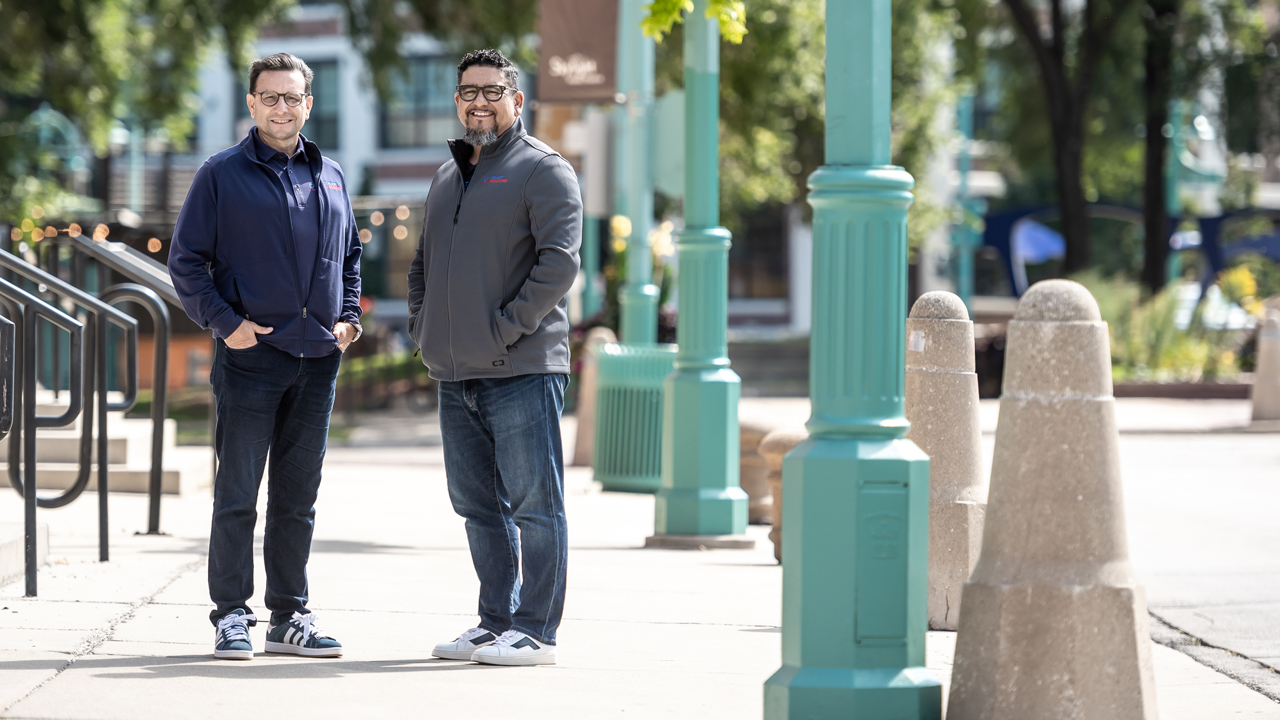
Rivera and Reeves stand next to the Engine Company No. 10 sculpture depicting a firefighter and his dog, situated outside of a historic former firehouse in the Third Ward. Credit: Valerie Hill
Ready Rebound 2.0
One of Reeves’ first orders of business as the new CEO of Ready Rebound was turning the startup into a C Corporation, which allows the company to issue stock.
“I wanted to take my learnings from working in Boston and Silicon Valley and issue stock to the employees, and to have it be a company that even had the possibility of an IPO,” said Reeves. “That’s not something you hear about in Milwaukee.”
Reeves aimed to turn Ready Rebound from a family business into a tech startup that could attract high-level talent from places like Silicon Valley, where employees are accustomed to earning equity.
“It made (working here) more attractive. Startups can’t afford to pay top salary. They augment salary with equity. You can attract a lot more talented people if there’s a huge upside,” said Reeves.
He attributes Ready Rebound’s recent growth, in part, to the fact that the company has been able to build out an actual sales team to help share the message about their product.
“I became an evangelist with Luis, and then hired a sales team, who are also evangelists,” said Reeves. “A lot of it was getting the word out.”
In the past 18 months, Ready Rebound has more than doubled its employee count to 52 people. That total could grow by an additional 15 people by the start of 2026.
To support these new workers, approximately 9,000 square feet of new office space is being added at Ready Rebound’s headquarters, located at 311 E. Chicago St. in Milwaukee’s Historic Third Ward.
Ready Rebound also secured its first outside investment this summer. The startup, which has raised a total of $5.1 million, received a $550,000 investment from Madison-based HealthX Ventures in June.
HealthX Ventures, part of the Wisconsin Investment Fund, normally invests in startups that offer a service tailored to a hospital or clinical environment, something Wisconsin has a lack of, according to Brian Lindstrom, partner at HealthX Ventures and a Ready Rebound board member.
“There’s not a lot of really exciting health care enabled technology or digital health (startups) in the area, so we had to broaden the definition,” said Lindstrom.
After one of HealthX Ventures’ principals met with Reeves, the entire team soon found Ready Rebound’s mission compelling.
“We do love founders who have done it before,” said Lindstrom. “With David having done this with OpenGov in a big way, he just knows how this works.”
He cited the “sophistication” of board members convened by Reeves as a major reason HealthX Ventures decided to invest.
Ready Rebound’s current leadership team, coupled with its overwhelmingly positive customer feedback, gave Lindstrom several excuses to be excited to invest.
“Their net promoter score is 83 – it’s unheard of, especially for health care,” he said. “It’s really hard to get above 20 or 30, and these guys are doing 83.”
Growth trajectory
During the COVID-19 pandemic, the Ready Rebound team realized how many people are considered “essential workers,” from nurses and truck drivers to construction workers and delivery drivers.
Eventually, Ready Rebound will expand its health care services to include different spheres of essential workers, the people Reeves says help protect the economy. Serving police and fire departments will remain a central focus.
“We never want to deviate from our mission, which is, first of all, to protect those who protect us. First and foremost, that’s first responders,” said Reeves.
The combination of growth and profitability Ready Rebound is experiencing is extremely rare for a company of its size, Lindstrom said.
He believes there really isn’t a current limit to the company’s growth given how many cities Ready Rebound can still expand to, and the numerous categories of essential workers that can be included in the service.
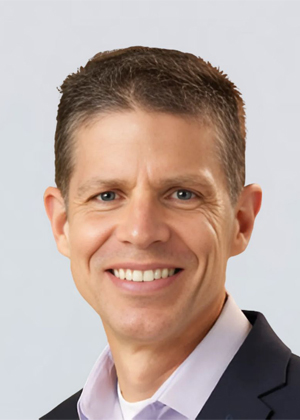
Brian Lindstrom, HealthX Ventures
“They are a unicorn in their space. No one else directly competes with what they do,” Lindstrom said. “They can just keep going.”
While there is a “tentative number” at which the company’s leadership team might consider selling, Lindstrom said those discussions are still in very early stages.
Dual benefits
Municipalities that choose to partner with Ready Rebound will often find two kinds of benefits to the service, Litchford said.
Since South Milwaukee’s Fire Department began partnering with Ready Rebound last year, six people – out of the department’s total 26 – have used Ready Rebound’s service, leading to overtime cost savings of $69,000.
The South Milwaukee Fire Department pays $10,000 annually for the service and offers it to active firefighters, their families and retired firefighters. Each municipality has some flexibility to customize which employees can opt in to use the benefit.
South Milwaukee also allows firefighters access to a recovery and recharge room, a weight room, red light therapy and mental health services – all critical components to the recovery process.
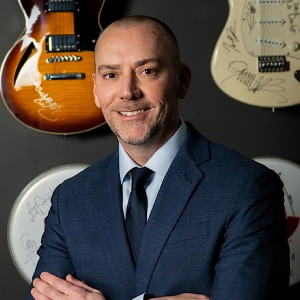
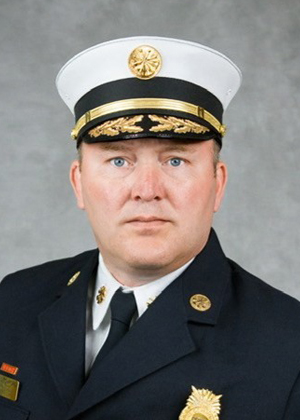
John Litchford, South Milwaukee Fire Department
“The value is letting your members know that you’re looking out for them and you want to help get them back to work as soon as possible,” said Litchford. “That’s why we actually do it – the money is just a bonus.”
It’s not uncommon for officers to deal with skeletal muscle injuries given the strenuous nature of their work and the weight they’re constantly carrying on their bodies, said Wauwatosa Police Chief James MacGillis.
“They could be sidelined for weeks, or even months,” said MacGillis. “They have to find a provider, and then set up the appointment, but the (doctor) might not be available. Meanwhile, they’re in pain… they’re suffering and they’re hurting.”
Wauwatosa officially started working with Ready Rebound in 2016, offering benefits to police, fire and public works employees. Since then, the City of Wauwatosa has had 128 cases of workers using Ready Rebound, which translates to more than $1 million in backfill overtime savings.
“People get into police work because they like to be out in the field, not behind the desk. When they’re behind the desk for a significant amount of time, they usually are going stir crazy,” said MacGillis.
As Ready Rebound continues to expand its national reach, the company is also finding ways to streamline its technology for the end user.
Along with using artificial intelligence to create operational efficiencies, the company is working on a new cloud-based product that allows users to visualize and track all of the first responder injuries in their jurisdiction.
The company intends to use its database of first responder injuries – the largest one in the country – to help people predict and understand injuries better, said Reeves.
“As people age, they end up suffering with nagging injuries for 25 years,” he said. “I think Ready Rebound can at least help firefighters and first responders retire with dignity.”
Elizabeth Morin is a writer based in Virginia Beach. She is passionate about local sports, politics and everything in between.
Have any Virginia Beach-related news published on our website? Email us at admin at thevirginiabeachobserver.com.