More than 70% of employers in the U.S. say they are struggling to find the skilled talent they need, according to a survey conducted by Milwaukee-based ManpowerGroup.
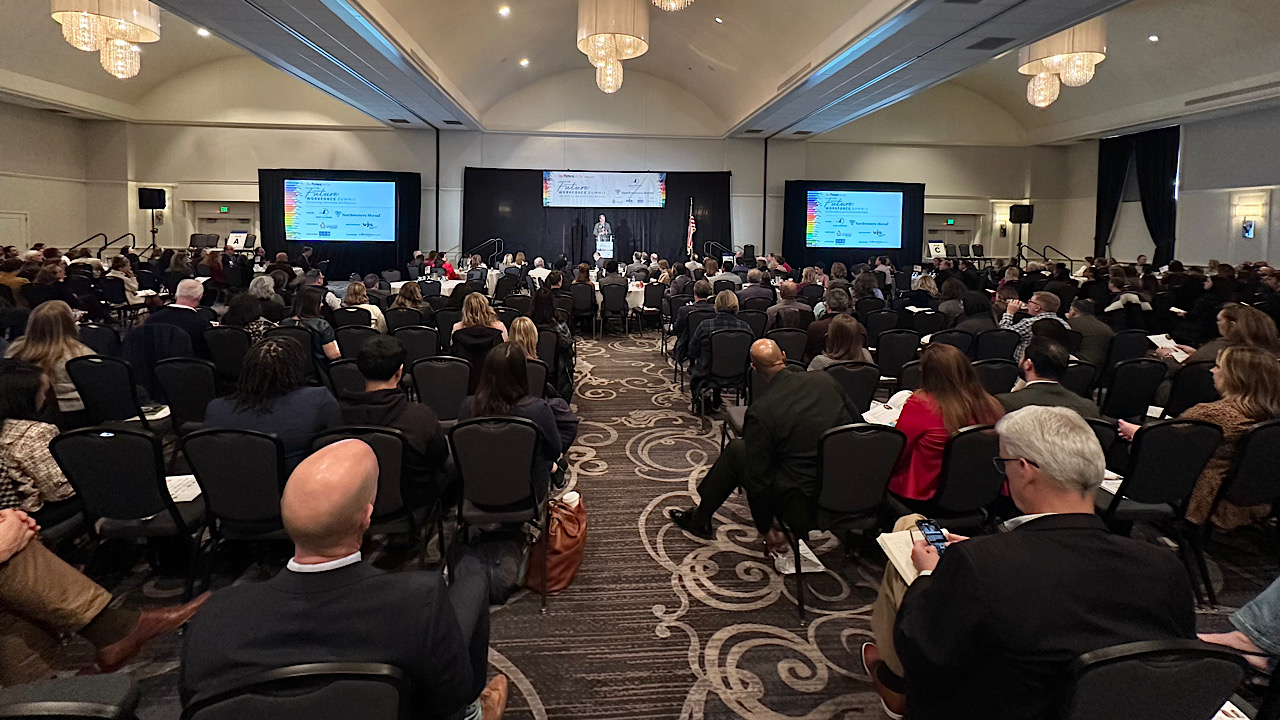
The solution to closing that talent gap: artificial intelligence adoption, education and literacy, according to Raj Namboothiry, senior vice president and head of Manpower North America, who delivered the keynote address at BizTimes Media’s Future Workforce Summit event on Thursday afternoon.
Technology is outpacing curriculum and “no sector is immune,” Namboothiry said.
Thus, the shortage of skills is worsening, driven by an increased need for digital and technical skills, AI and automation outpacing the development of human skills, an aging workforce and a change in career expectations in younger generations.
ManpowerGroup’s survey estimates that nearly 40% of the core skills employers are looking for will be disrupted in the next four years, though Namboothiry estimates the figure is much higher at 60% or more. Combined with a widespread and growing lack of trust in company leadership, the need to be adaptable and quick with AI learning is increasingly essential to the success of the future workforce.
“AI is no longer a specialty, it is a literacy,” Namboothiry said.
Some companies are looking to close the talent gap with upskilling or reskilling courses and credentials, though only 27% of those surveyed by ManpowerGroup are looking.
“It is a significantly low number,” Namboothiry said.
Namboothiry urged attendees to stop poaching and start producing skilled workers via upskilling opportunities, reiterating the only sustainable strategy to build a successful talent pipeline is to offer continuous learning to keep up with the rate of technological growth.
Nearly half of employers participating in the survey said the biggest barrier is not technology; it is people.
Surveyed employers also said that over half of their employees are struggling with AI adoption, basic reading and math skills, job hugging – actively looking for other jobs while working in their primary role – and focusing on one job at a time. Nearly 70% of Generation Z workers supplement their full-time job with gig work, investing or other part-time roles, the study found.
To remedy some of these widespread trends, Namboothiry suggested adjusting company offerings to accommodate a fast-evolving workforce and partnering with those tasked with educating individuals who are enter the labor market.
In addition to offering upskilling opportunities, employers should adjust hiring practices to accommodate their applicants’ socioeconomic, geographic and gender backgrounds, he said. They should also be flexible to new hybrid working environments and open to collaboration with educators, other employers and policymakers to create a workforce that is adequately prepared to adopt a changing technological landscape.
“The curriculum of the future cannot be built in isolation,” Namboothiry said.
Educational institutions remain an essential piece of the equation. Successfully educating the future workforce will require classwork to connect directly to career skills. This includes offering updated technology curriculum, short-cycle learning, expanded internships and apprenticeships, a focus on continuing to develop human skills, and welcoming opportunities to partner with employers to create a direct school-to-work pipeline.
Employers then need to be flexible in hiring for potential rather than credentials alone, investing in proprietary or partner-led upskilling courses, and redesigning traditional roles within their companies.
Candidates must remain open to learning.
“The single biggest predictor of future employability is the willingness to keep learning,” Namboothiry said. “My view is that degrees are no longer the finish line, they’re the starting point.”