Food and beverage manufacturers have used artificial dyes to make brightly colored products for decades. But new guidelines from the Trump administration and Health and Human Services Secretary Robert F. Kennedy Jr. means this common practice is being phased out and industry leaders are left wondering what manufacturing methods might be targeted next.
In April, the U.S. Food and Drug Administration said it plans to eliminate all petroleum-based synthetic food dyes from the nation’s food supply, while also accelerating review of natural color additives. Eight common food dyes are set to be phased out by the end of 2026, including Green 3, Red 40, Yellow 5, Yellow 6, Blue 1 and Blue 2.
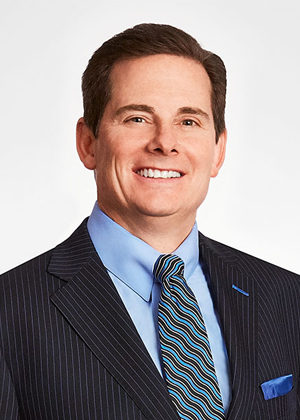
“What is different about Mr. Kennedy and the folks working under him at the FDA is that they are changing things related to what I would call institutional principles,” said Paul Benson, partner at Milwaukee-based Michael Best & Friedrich.
Paul Benson
Through a “generally recognized as safe,” or GRAS, designation, certain food products and food chemicals have been grandfathered in as safe because they’ve been on the market for a long time without an issue. Benson says targeting this fundamental principle is a unique move by the Trump administration.
“(RFK Jr.) is taking a far more aggressive approach and dealing with things that I think most people who have practiced in this space thought were untouchable principles,” he said.
Benson is seeing companies deciding to pivot and find alternatives to synthetic dyes rather than try to fight forthcoming federal regulations, especially if there isn’t any science to back up a certain dye’s safety. A bigger concern for food and beverage manufacturers is what ingredients or foods the FDA might target next. Benson believes ultra-processed foods (like frozen pizzas or TV dinners) could be next.
“Clients want to know what’s going to be the end point,” he said. “So many of these fundamental principles are now potentially under attack. They’re most concerned about the next shoe that’s going to drop.”
Costs and branding
Aside from the uncertainty surrounding historically accepted manufacturing ingredients, companies have two big hurdles to consider when transitioning to natural colorants: cost and branding.
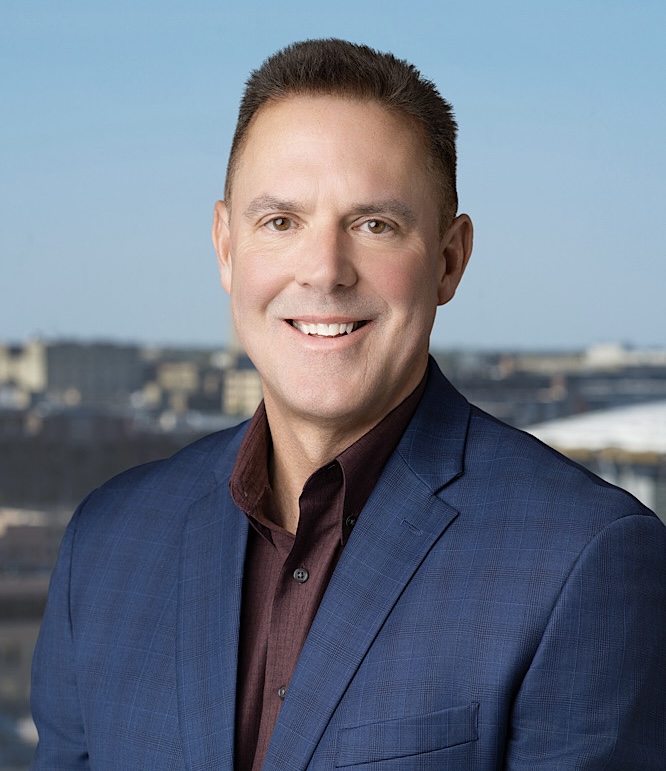
Denise Baldeh, director of research and development at St. Francis-based Wixon, said she’s seeing the FDA’s regulations mostly impact snack and seasoning blends as well as bakery items. However, health-conscious consumers and the increasing use of GLP-1 medications are also influencing a shift to natural ingredients.
Wixon is a maker of seasonings, ingredients and flavors for the food industry.
Denise Baldeh
“Within the last five to 10 years, we’ve seen fewer people wanting to use those synthetics, and more people truly trying to get into the natural space,” said Baldeh.
Wixon is working with a handful of companies that use synthetic dyes to create a matching natural product that will be ready to go when federal bans go into effect.
“They’ve got a formula that’s already made, but they might not order that formula until they feel that they need to. If it’s delayed or, all of a sudden, the (FDA) decides to remove this ban, it really isn’t like the end of the world,” said Baldeh.
This strategy requires a bit more planning for Wixon. Natural and raw materials have a shorter shelf life, so enough backup material to make a natural product needs to be stored on-site. Wixon has had to diversify its chain of suppliers to find different ones for each color or application. The company uses thousands of different ingredients every year.
Along with the technical difficulties of formulating an entirely new product from natural ingredients comes a higher cost. Manufacturers were able to use a much smaller amount of synthetic coloring to achieve their ideal shade, Baldeh said. Often, the amount of synthetic dye needed is only in the parts per million. Natural colors can be up to 10% of a manufacturer’s blend.
“(Natural colors) are less expensive than the synthetics, but because you need so much more of them, that price difference is just not balancing out,” said Baldeh.
Manufacturers might be paying more for a less vibrant color. In some instances, exact replicas of iconic colors might not be possible.
“I don’t represent the manufacturer of M&M’s, but I have heard from people in the know that the blue color could go the way of the dinosaur,” said Benson. “For whatever reason, that one is tougher to reformulate.”
Bright colors are also closely linked to how consumers identify and experience a brand. Products like Cheetos are known for its bright orange color, but even its maker Frito-Lay is experimenting with a dye-free version.
“A product might have spinach in it, so the customer wants it really green,” said Benson. “If you’re going to take out synthetic colors, can you deliver on that? Is the consumer going to think that you took out the spinach?”
A historic opportunity
For those who began investing in the natural color movement years ago, the FDA’s forthcoming ban of synthetic dyes represents a massive business opportunity.
Milwaukee-based Sensient Technologies Corp., a maker of colors, flavors and other specialty ingredients, first made a strategic shift into natural colors more than 15 years ago.
At that time, the company started investing internally in new technologies and diversifying its supply chain. Sensient has been able to expand its production capacity globally.
The company is seeing “significant activity” from customers as they prepare for a conversion to natural colors, said Paul Manning, president and CEO of Sensient, during the company’s second quarter earnings call.
Sensient reported 6.6% revenue growth within its Colors Group, which handles color solutions for food products.
“As I’ve said before, the U.S. conversion to natural colors is the single-largest revenue opportunity in Sensient’s history,” said Manning. “We believe that the conversion to natural colors was inevitable given the broader market conversion to more natural food products.”
Sensient continues to invest heavily in this space and expects to spend more than $100 million in 2026 on natural color capabilities.
“We have invested considerably in research and development for natural colors, and we will continue to emphasize this for the foreseeable future to ensure we continue to optimize our portfolio,” said Manning. “We have also worked to build a resilient supply chain to provide the botanicals necessary to produce natural colors.”
Sensient has already unveiled several products within the natural color category. The company’s Microfine range of natural food colorants can emulate bright reds and yellows. This line is particularly popular for bakery and confectionary applications. Another new natural blue product, called Marine Blue Capri, was launched earlier this year. The product was designed for use in the beverage market. Sensient’s Sienna Fortis product allows customers to achieve a light brown shade without the use of caramel coloring.
“While we continue to believe in the safety of all synthetic food colors, Sensient has engaged with a substantial number of brands to support their transition to natural colors,” said Manning.
He cautioned that companies that decided to forgo creating a replacement for their current synthetic dyes will likely experience a decrease in consumer satisfaction.
“Choosing less vibrant colors or eliminating color altogether has repeatedly led to poor outcomes in the market,” said Manning. “More often than not, consumers’ flavor perception changes as a result of modifying a product’s synthetic vibrancy.”
Elizabeth Morin is a writer based in Virginia Beach. She is passionate about local sports, politics and everything in between.
Have any Virginia Beach-related news published on our website? Email us at admin at thevirginiabeachobserver.com.