Milwaukee-based motorcycle maker Harley-Davidson on Tuesday reported a first quarter profit of $25 million, down $108 million from last year’s first quarter net income of $133 million.
The company also reported a 12% overall decline in revenue to $1.17 billion, largely due to a significant drop in revenue from Harley-Davidson’s Financial Services (HDFS) segment, which was down 54% to $112 million from $245 million last year.
Though its income and revenue were down, Harley reported an 8% increase (to 33,500) in its global motorcycle sales during the first quarter, largely from the North and Latin American markets. Its first quarter North American motorcycle sales were up 14% from last year to 23,800, and its Latin American sales were up 21% from last year to 700.
A near $50 million increase in expenses burdened the company this quarter also, $15 million of which was used for one-time payouts to eliminated staff in its most recent round of layoffs, and $34 million which was allocated to higher warranty costs from recalls, leadership changes, increased marketing efforts and select discrete expenditures.
The company’s electric vehicle segment LiveWire saw an 87% revenue increase, from $3 million last year to $5 million.
Harley is remaining steadfast in its guidance for the remainder of 2026, focusing on a slew of new initiatives such as decreasing dealer inventory, which the company has already begun doing. Harley reported a 22% decrease in its total global inventory and a 21% decrease in its North American inventory.
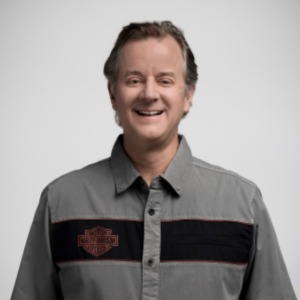
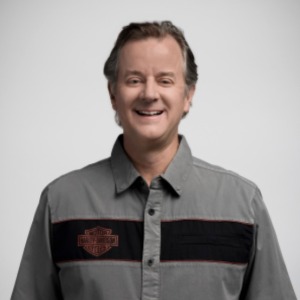
Arthur Starrs
“We recognize the critical role our dealer network plays in the Harley-Davidson, Inc. ecosystem, and we are encouraged by the renewed sense of partnership and momentum across the network,” said Harley-Davidson CEO Arthur Starrs, who took the helm in October.
The focus on its dealer network is one of several initiatives launched Tuesday morning as part of a larger strategic plan the company is calling “Back to the Bricks,” paying homage to the return-to-office mandate at Harley’s Juneau Avenue headquarters in Milwaukee, which many employees refer to as “The Bricks,” Starrs said.
The new initiative will include a heightened focus on the company’s dealership network; efforts to recapture shares, of which the company has already repurchased 6.6 million worth $128 million; restructuring to improve cash flow and EBITDA margins; and leadership changes, some of which have already been made.
Efforts towards the Back to the Bricks plan aim to double profitability in 2026 and double it again by 2029.
The company also aims to earn more than $350 million in EBITDA in 2027.
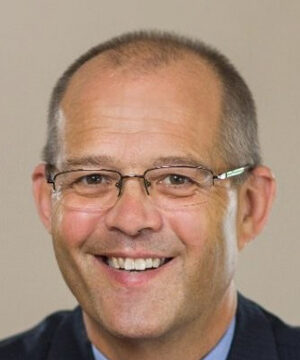
“The path to get there is clear and execution-driven, anchored by roughly $150 million in fixed cost reduction, better alignment between wholesale and retail volume, the full impact of the (returning) Sportster and Sprint (models), targeted expansion in high-margin parts and accessories, and more effective, disciplined promotions,” said Harley-Davidson chief financial officer and president, commercial Jonathon Root.
In efforts to provide accessible products to its consumers, Harley is reintroducing two decommissioned bikes, both of which are easily customizable to enhance its parts and accessories profits.
The Sportster, a middleweight, highly customizable motorcycle with an air-cooled powertrain and an accessible starting price point, will return in 2027 after five years off the market. The relaunch has been the most requested motorcycle from both riders and dealers, the company said.
“We expect Sportster to drive higher volumes, and with its customization potential, we expect strong attachment to parts and accessories as riders personalize their motorcycles,” Starrs said. “Beyond the motorcycle itself, Sportster also creates opportunity across apparel, licensing and the broader rider ecosystem.”
The company is also bringing back its Sprint model this year. The Sprint, a lightweight, customizable bike suited for new riders, has not been on the market since the 1960s.
Harley spent an additional $45 million in tariffs during the first quarter, the most significant year-over-year tariff impact it expects to experience this year, Root said.
“We expect the cost of increased tariffs to be in a range of $75 million to $90 million for the full year 2026, which is favorable to what we guided to in our prior quarter,” Root added.
Harley manufactures a majority of its core products domestically, though it continues to face pressures from U.S. tariffs on imports of parts like semiconductors used in modern bikes. It sources about 75% of its components from American suppliers, according to Reuters.
Elizabeth Morin is a writer based in Virginia Beach. She is passionate about local sports, politics and everything in between.
Have any Virginia Beach-related news published on our website? Email us at admin at thevirginiabeachobserver.com.