[ad_1]
It’s no secret that technical education is the backbone of Wisconsin’s economy; however, just a short decade ago, the 16 institutions known as the Wisconsin Technical College System were fighting long-rooted stigmas.
Technical education in Wisconsin was founded on two core principles: workforce readiness through specific career training and economic development delivered directly to local business and industry. Yet for years, it was widely viewed as the “second option” for higher education and, for some, that narrative still reigns true.
For years, Moraine Park Technical College saw continued declining enrollment. At the same time, more students were taking on significant debt for an education that could have either been started or fully completed at a technical college for a fraction of the cost.
So, what changed?
The Turning Point for Technical Education
In 2021, Moraine Park began exploring its first referendum, asking district communities for an increase in the tax levy. This was not a decision taken lightly. President Bonnie Baerwald, a certified public accountant (CPA) and decades-long leader in higher education, understood the importance of minimizing taxpayer burden, but she also recognized the opportunity to strengthen the region’s economic future through expanded, modern learning spaces aligned to business and industry needs.
Through that work and intentional advocacy, the narrative began to shift. Conversations with business leaders deepened, workforce needs became clearer, and partnerships didn’t just form—they strengthened and evolved.
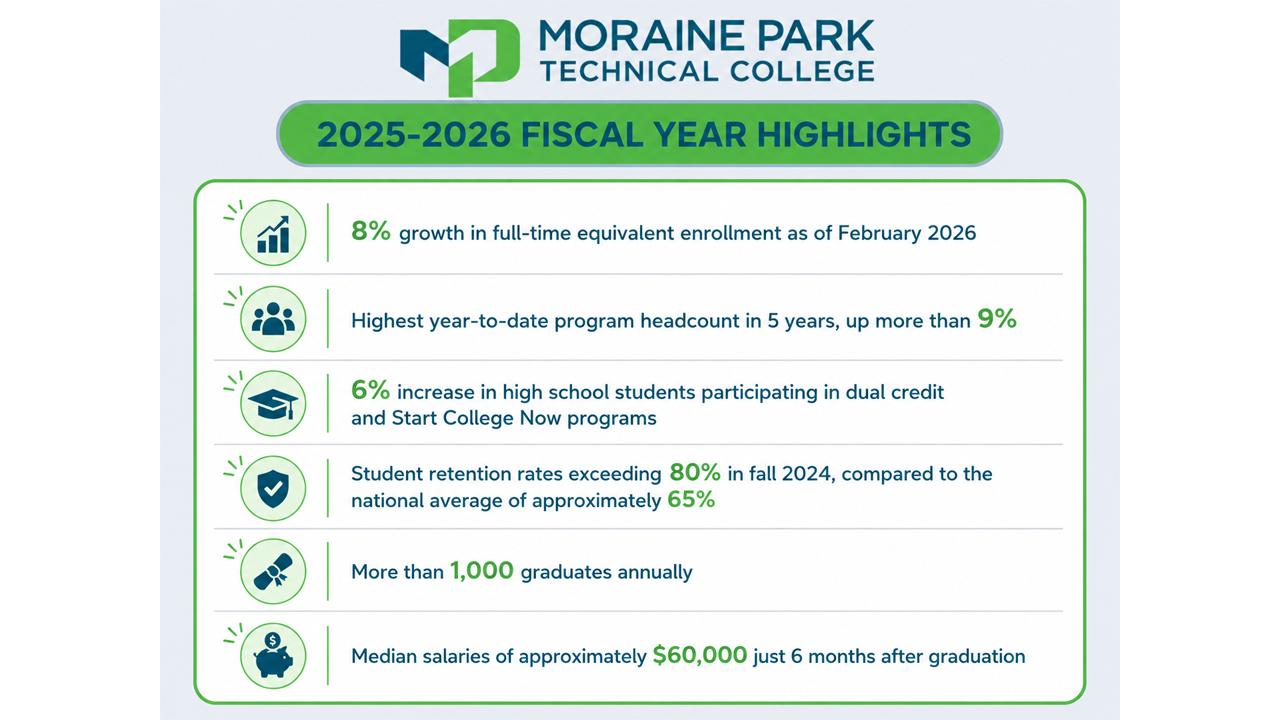
The result? Moraine Park and technical education reemerged as cornerstones of regional economic success, and the numbers are proof of that value.
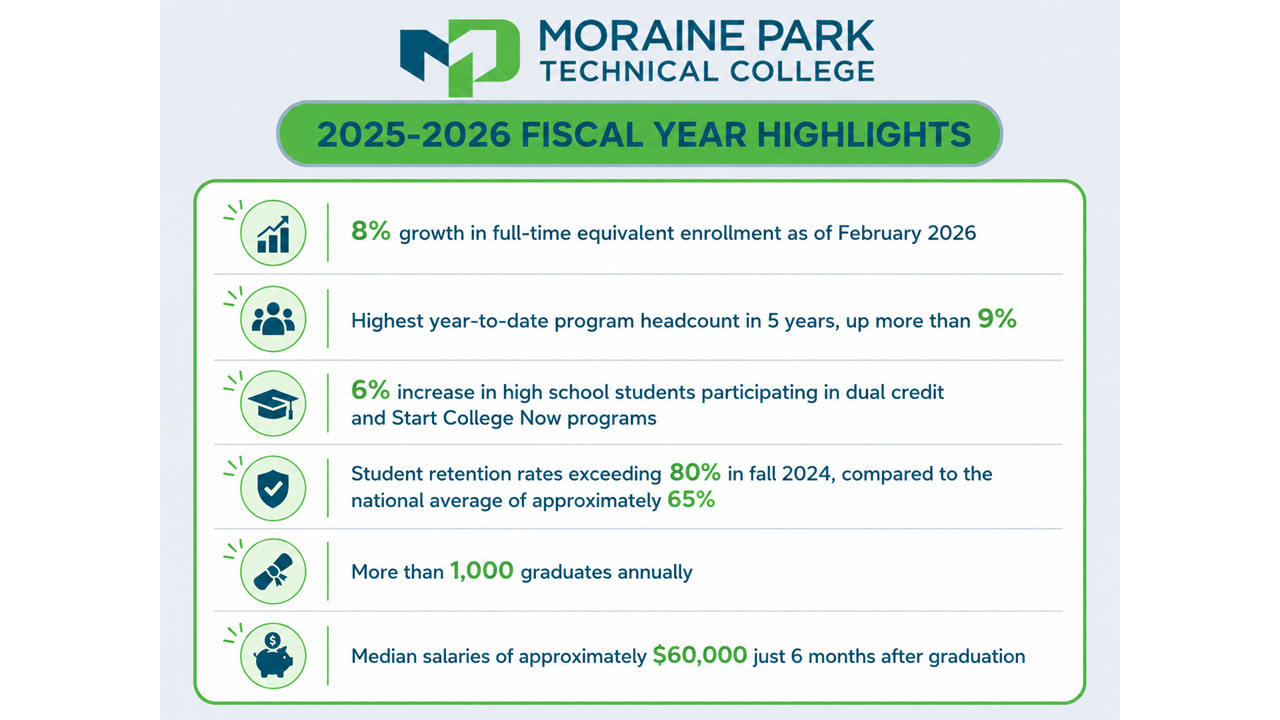
At the same time, Moraine Park remains one of the most affordable pathways in higher education:
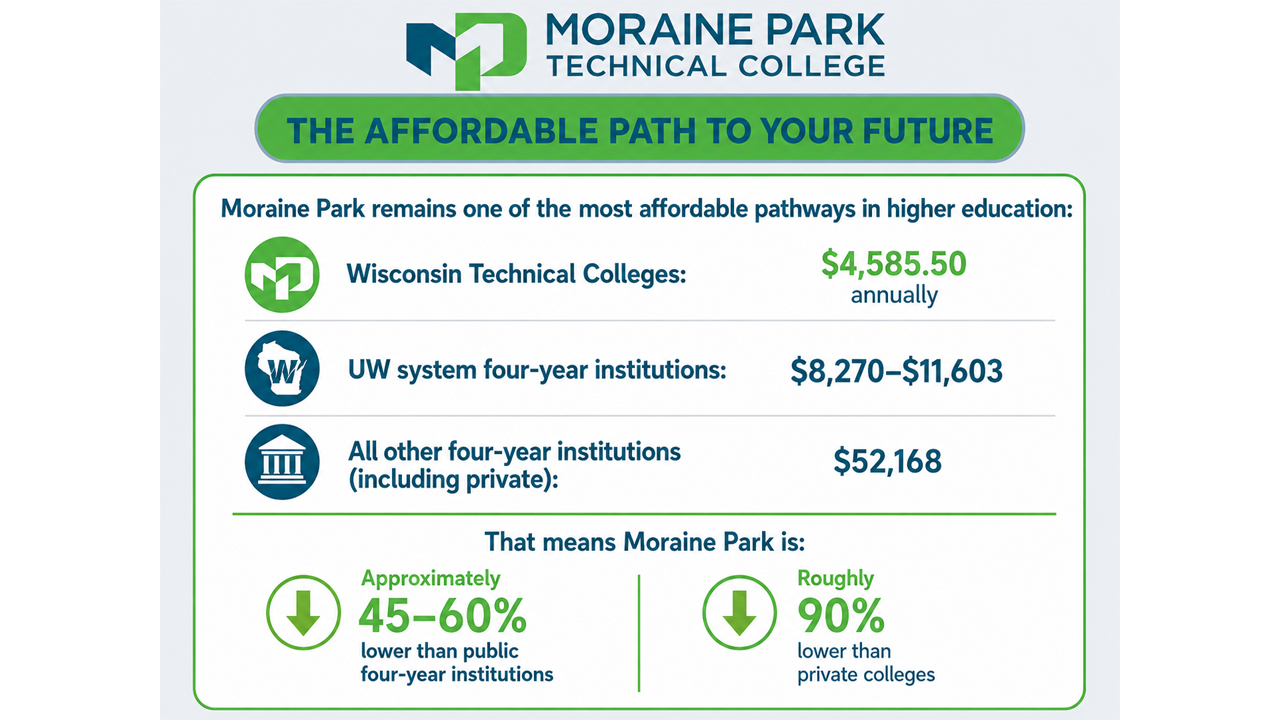
Students who begin at Moraine Park can realize substantial total savings without sacrificing quality, and thanks to updated and robust transfer agreements, credits earned will transfer.
Where Student Success Meets Workforce Demand
Beyond the numbers are the stories.
Kelly Hagner, of Fond du Lac, began at Moraine Park in 2005, initially pursuing nursing. She earned dual degrees in nursing and supervisory management, all while raising a family. After graduating in 2009, she continued her education at Marian University and today serves as a family nurse practitioner specializing in hematology and oncology at SSM Health Fond du Lac Regional Clinic Cancer Center.
Local employers are finding a comparable impact.
A long-standing Beaver Dam manufacturer has partnered with Moraine Park for more than a decade, engaging through advisory committees, employee training, student experiences and sponsorships. In 2023, the company worked with Moraine Park to deliver training in CNC machining, industrial maintenance and mental health first aid, while also mentoring and training 40 welding interns through the College’s boot camp programs.
This is what modern technical education looks like: responsive, collaborative and embedded in the community.
Yet, challenges remain.
Why Continued Investment Matters
There is still a significant struggle to attract traditional college-bound students. Despite lower costs, strong outcomes, vibrant campus life and transfer opportunities across the state, there are true threats that may continue to hold some students back from pathways that could better serve their future.
At the same time, funding for Wisconsin’s technical colleges is being reconsidered at the state level, including a recent proposal to shift from local to statewide funding models. The proven value of technical education, a model that consistently drives workforce and economic success, is being called into question in broader funding discussions.
These challenges are not minor; they represent a growing workforce risk for Wisconsin, and that is why continued investment in Wisconsin’s technical colleges is essential.
Investment means:
- A consistent, locally supported funding model that ensures stability for programming, staffing and long-term planning
- Expanding access to dual credit and early college opportunities
- Strengthening workforce training partnerships
- Supporting modern facilities and equipment
- Ensuring students and families understand the full value of these pathways
Whether a student aspires to be a nurse, engineer, teacher, lawyer, pharmacist, physician assistant or pursue any other career, that journey can start at Moraine Park and build a strong, affordable foundation for their future.
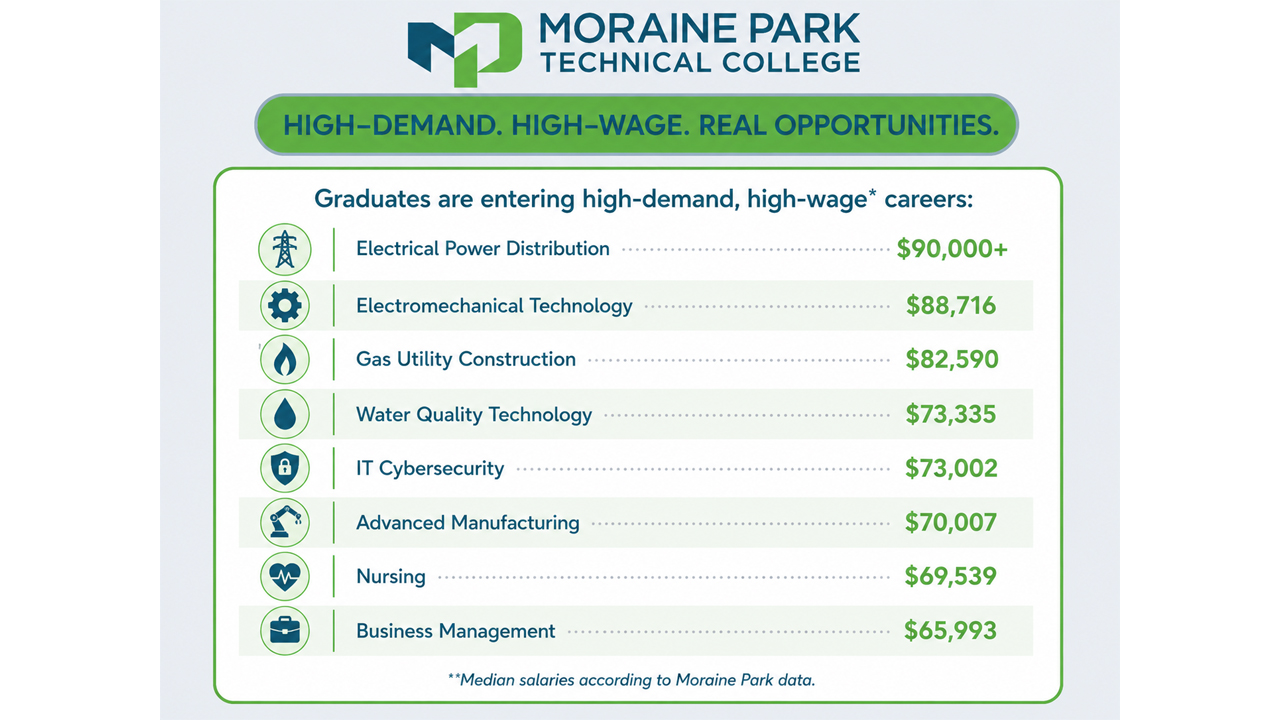
Since 1912, Moraine Park has served its district communities, helping shape the workforce across Dodge, Fond du Lac, Green Lake, Washington and surrounding counties. Its alumni are everywhere, leading, building and sustaining the very communities we call home.
If it’s built by Moraine Park, or technical education, it will last. The question isn’t whether technical education works. It’s how we will continue to ensure a model that we know works can thrive.
[ad_2]