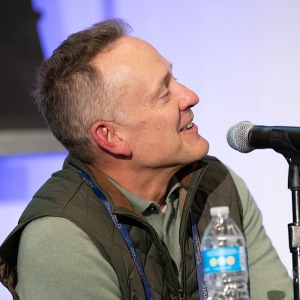
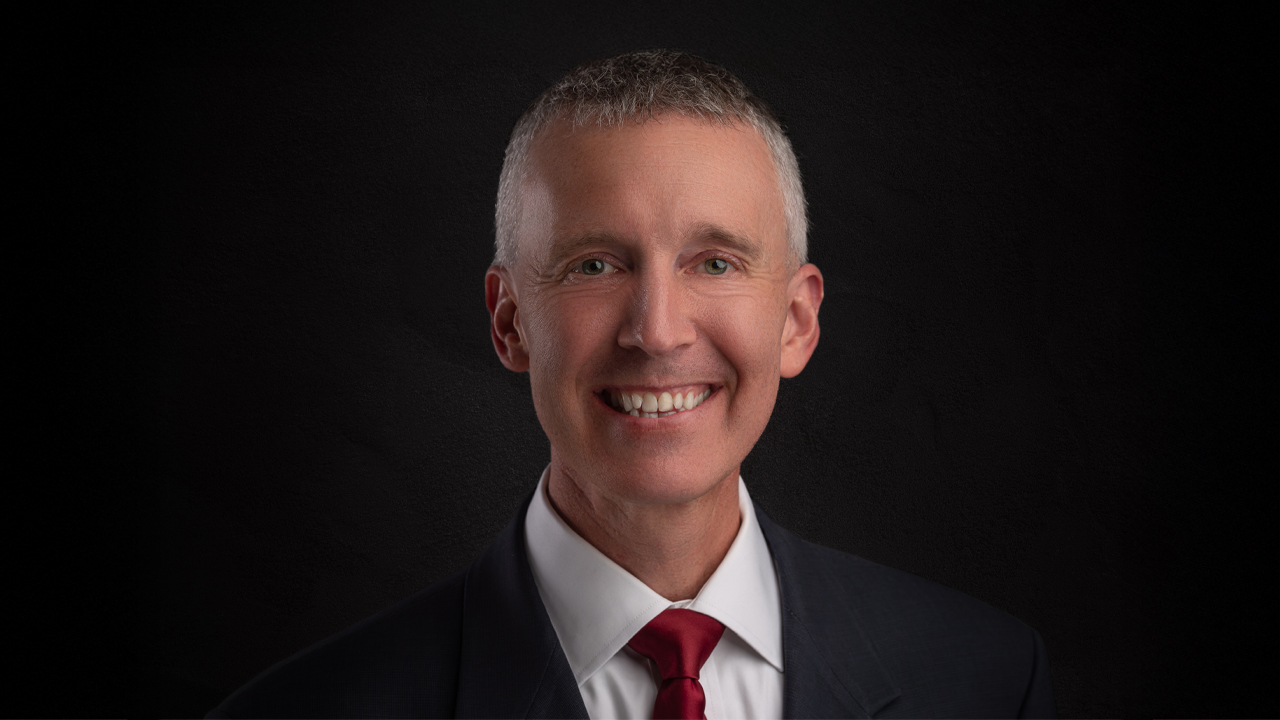
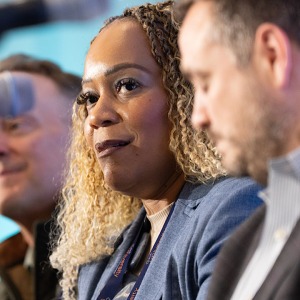
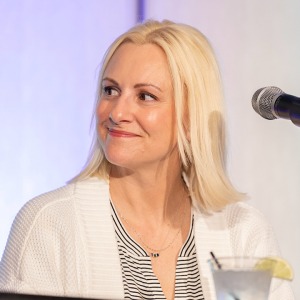
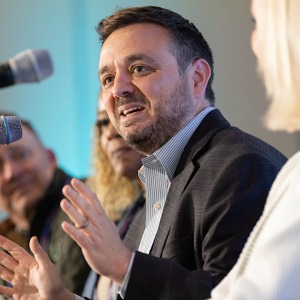
BizExpo, the daylong business-to-business networking and education event hosted by BizTimes Media, held Thursday at Brookfield Conference Center, concluded with Cocktails and Conversations, a panel discussion with four notable area business leaders, including:
Specht, Bauman, Wright Cottrell, Jendusa and Kooyenga are all members of the Wisconsin 275, BizTimes Media’s list of the most influential business leaders in the state.
The following are highlights of their conversation at Cocktails and Conversations:
Kooyenga: Tell us about your workday, and what would people think is interesting or weird about it?
Specht: “Sometimes I work from home. If I work at home sometimes my day includes a 20-minute nap. It may sound very weird, but it’s a power nap and it really works. I set my timer and I can be out by minute 19. I wake up, I’m refreshed and I’m ready to go and I can get back to work.”
Bauman: “I work in a theater so anything is possible. I’m one of these people that likes to plan…and usually by 11 a.m. nothing is going to plan. Anything from an actor getting hit by a car…to a flood taking out our production center to you name it. It’s been a wild year. Anything is up for grabs.”
Wright Cottrell: “No day is the same. Working for an experiential marketing agency, we touch everything that you can think of. So, I can go from figuring out how to help my internal clients do an execution that involves cheese curds, to figuring out how to allow another client to sell non-smokeless tobacco to figuring out how do we actually go into a city and create memories for the Super Bowl. Someone watching that might think I’m a little unstable, because none of those things have a similar thread going through them. But I can be managing an issue related to them at any point in time during the day.”
Jerry Jendusa. Credit: Kenny Yoo
Jendusa: “I think I’m terribly boring. I think it’s important to be fairly consistent. Routine is really important to me. I do better work outside of meeting rooms, I do better work outside of buildings. I think more clearly when I walk.”
Walk us through your industry right now. What is the big change going through your industry? What are the threats and opportunities within them?
Jendusa: “The industries I’m involved in are biosciences. We’re dealing with regulatory with the FDA. We’re dealing with major pharmaceuticals and they’re going through an approval process for the very first time dealing with cell and gene therapy. There’s a bit of a biocentric hub forming between Madison and Milwaukee down to Racine and Kenosha. It’s navigating those challenges and doing something that’s so purposeful because some of these drugs are curative so there’s CAR T-cell therapy that actually can cure cancer instead of chemotherapy but then you’re having to deal with private pay and how do you commercialize something like that, so it’s not just for the ultra-wealthy that could afford it.”
DeVona Wright Cottrell. Credit: Kenny Yoo
Wright Cottrell: “We have a lot of headway for us in the experiential marketing industry. I say that because coming out of 2020-21 COVID when people were moving more insular and isolated that created huge opportunities for us because I think even moreso now than ever individuals and organizations are searching for a human connection. They’re searching for those opportunities where we can humanize in a world where things are very tech centered, things are very regulated, given the economy budgets are constrained, and so we are experiential marketing but we touch every single industry that there is. So, dealing with clients that are heavily regulated to more clients that have a little more flexibility and helping them to create those brand moments on behalf of their clients with such a wide spectrum of opportunity from industry to industry. I think the experiential marketing industry is limitless and that creates a ton of opportunity for us. It creates challenges because of budget, the speed of technology, the use of AI and how do we incorporate that within our processes to become more efficient on behalf of our clients and do the work that we do at a scale where it’s valuable, we can show what our value is and also translate that value to clients and what they expect in a way that is touching the human, is touching their memories, is creating light bulb moments for them because I honestly believe if we get rid of the human connection then that’s when humans become extinct.”
Bauman: “There’s 1,900 live professional theaters in the United States, the vast majority of which are suffering, they’re on the edge of bankruptcy. We’re operating in the top 1% of that field. The three things that have been on my mind: one, Wisconsin ranks dead last for public support for the arts, that’s an ongoing challenge for us; but in per capita private philanthropy support, Milwaukee is the best in the country, that’s the reason we have the theater that we have. The other two challenges, AI, if you can imagine, is a huge disruptor for intellectual property so how playwrights get paid, how artists get paid, how our field continues is going to be incredibly different in a couple of years than it is today; also, related to technology, our attention spans are getting much shorter than they were even five or ten years ago, so if you expect to have a full arc of entertainment in a 30-secondTikTok video, which is what all of our kids are expecting, a 3 hour play becomes a challenge.”
Christine Specht. Credit: Kenny Yoo
Specht: “We make and sell sub sandwiches and we have to do that as often that we possibly can. I love the simplicity of what we do. But there’s nothing really simple about it. The challenges are that we continue to see our labor costs rise, and we can’t always go and take price (increases) because (customers) have a threshold they are willing to accept. It’s really about that delicate balance of how do you manage your rising costs with your business and how much elasticity do your guests have and their ability to afford and want or choose to pay for your product. We are just the tiniest little minnow in the sea of these giant sub sandwich organizations. People from Wisconsin think we’re a national brand, but we’re only in Wisconsin, we have just shy of 100 units, compared to the thousands of units that our competitors have. That’s fine, I don’t worry about our competitors. I just stay focused on what I am doing. It’s a continuous process of improving and thinking about how can we continue to offer value to our consumers.”
What industry are you most excited about or see the most growth in right now?
Wright Cottrell: “Tech. I think technology, when used wisely, has huge benefits for everyone. It’s scary, definitely scary for a lawyer because there are all of these guardrails that we need to put around it to make sure we are smart when we use it, but I think technology helps us to be better in a lot of different ways. I’m excited and scared about the use of technology at the same time. Because something can be both a blessing and a curse. You put it in the hands of the wrong people and things can go awry. But I’m excited about what the future holds in that area.”
Before you became a leader, who was the leader that sticks out in your mind and taught you things that you take with you in your current role?
Specht: “My father was my mentor and a big supporter of me. He’s been gone for two years now. He had a really different leadership style than I do. He was the true entrepreneur. When I entered the scene, first in HR and then as the leader of the organization, he was so happy that I wanted to do that because I was a trusted person, his daughter, but he also recognized I was going to make plenty of mistakes, so he was very patient and very understanding about that, and always offered his advice, sometimes I didn’t’ want to hear it because sometimes he treated me like I was still 17, and certainly his daughter, right? So sometimes we went round and round, but most times I could talk to him and really share his wisdom, but recognizing we were totally different leaders and had totally different leadership styles. He was much more reserved, more quiet, more focused on the P&L, I’m way about the people. His strength as a true entrepreneur was there. I look at my strengths as somebody who can continue the process and continue to manage and grow the company.”
Chad Bauman. Credit: Kenny Yoo
Bauman: “When I first moved here I knew of Sara Tonen O’Connor who was legendary in our field. She managed Milwaukee Rep from 1974 to 1996. She was the CEO of the company at a time when she could not go into a country club without a male escort because women weren’t allowed into country clubs at that time and she had to walk into CEO’s offices and raise tens of millions of dollars and a lot of our success today is due to her tenacity. She just turned 94 and I have biweekly breakfasts with her and she is astonishing. The second is Greg Oberland, who was my board president from 2019 to 2022. I was meeting with him on a daily basis. He was the retired president of Northwestern Mutual. I just had lunch with him a couple of weeks ago and I said, ‘Greg I’ve never seen such an accomplished leader that not a single person I’ve ever heard say anything bad about him.’ You think about running such a large organization, having such a big impact, making such difficult decisions and everybody seems to love him.”
Wright Cottrell: “My mom never worked a corporate job. My mom was one of 17 children, she’s the oldest. Was a sharecropper originally. When she and my dad moved to Milwaukee she was a homemaker and worked part time most of her life. I am one of 13 (children), number 12. She always worked really hard. She always had these infamous sayings like, ‘Devona you weren’t born a twin so you can’t be afraid to walk into a room by yourself, or you can’t be afraid of going to this place by yourself.’ She has a wonderful ability of bringing people with different interests around the table and being able to have all of those different people get along. She had a way of pulling people in and her inclusive leadership style was very encouraging to me.”
Elizabeth Morin is a writer based in Virginia Beach. She is passionate about local sports, politics and everything in between.
Have any Virginia Beach-related news published on our website? Email us at admin at thevirginiabeachobserver.com.