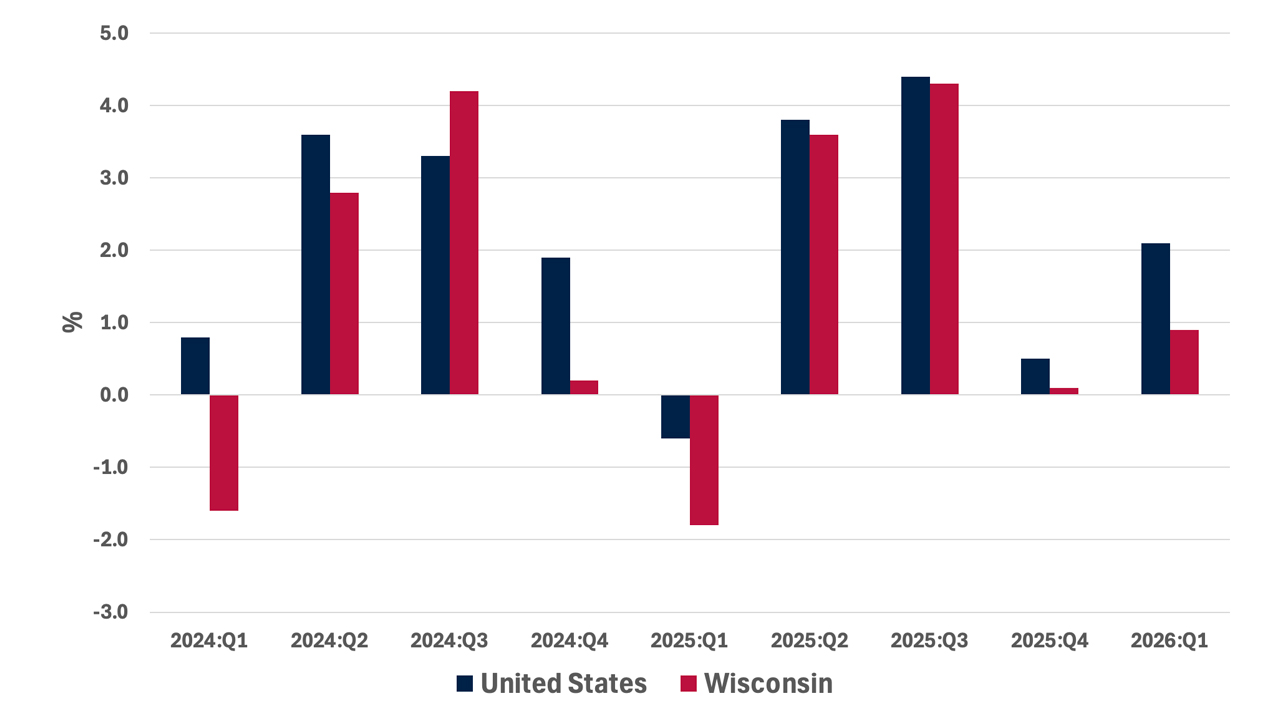
After a weak fourth quarter of 2025 with U.S. GDP growth of only 0.5%, the U.S. economy picked up steam during the first quarter of 2026 with GDP growth of 2.1%.
But there are several signs pointing to slower economic growth at mid-year. The Federal Reserve Bank of Atlanta projects U.S. GDP growth of only 1.7% in the second quarter. The U.S. economy added only 57,000 nonfarm jobs in June, well below expectations. The U.S. labor force participation rate has dropped to 61.5%, the lowest level since March of 2021, which diminishes the value of an otherwise healthy 4.2% U.S. unemployment rate.
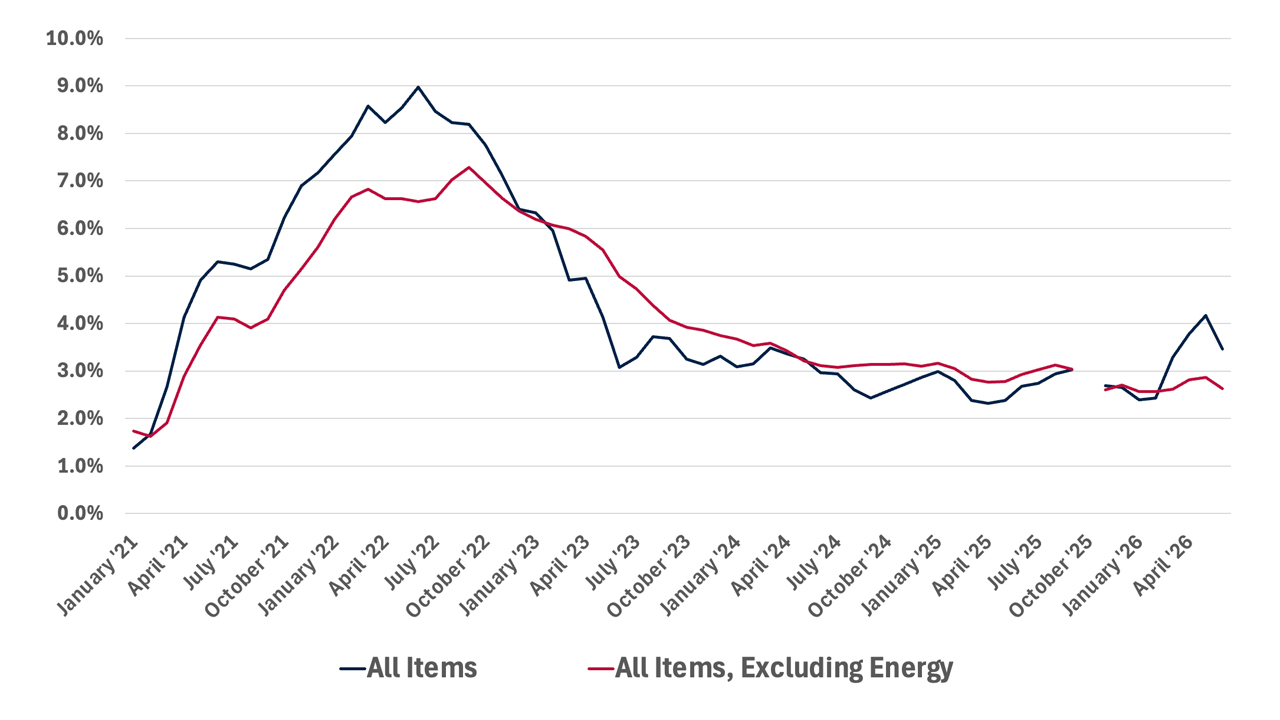
Inflation remains a stubborn concern for the U.S. economy. The annual inflation rate for the U.S. was 4.2% in May, up from 3.8% in April and the highest level since April 2023. Falling gas prices in June pushed prices down and the year-over-year inflation rate dipped to 3.5%. Those numbers are much better than when inflation spiked at 9.1% in June of 2022, but still higher than what is considered optimal. The Federal Reserve generally tries to manage the economy such that the inflation rate is around 2%.
The level of inflation this year has largely been driven by higher energy costs, with gas prices inflated ever since the U.S. and Israel launched joint military operations against Iran in late February. Iran responded by disrupting shipping through the Strait of Hormuz. About one fifth of the world’s oil and liquified natural gas is shipped through the Strait, located between Iran and the United Arab Emirates and separating the Persian Gulf and the Gulf of Oman.
The shipping disruption through that key waterway has driven up gas prices in the U.S. Some relief had occurred after the U.S. and Iran agreed to a ceasefire in mid-June, but then hostilities flared up again in the second week of July with the U.S. launching more strikes against Iran after Iran hit some ships in the Strait. Iran then responded to the U.S. strikes with attacks on U.S. bases in the Gulf.
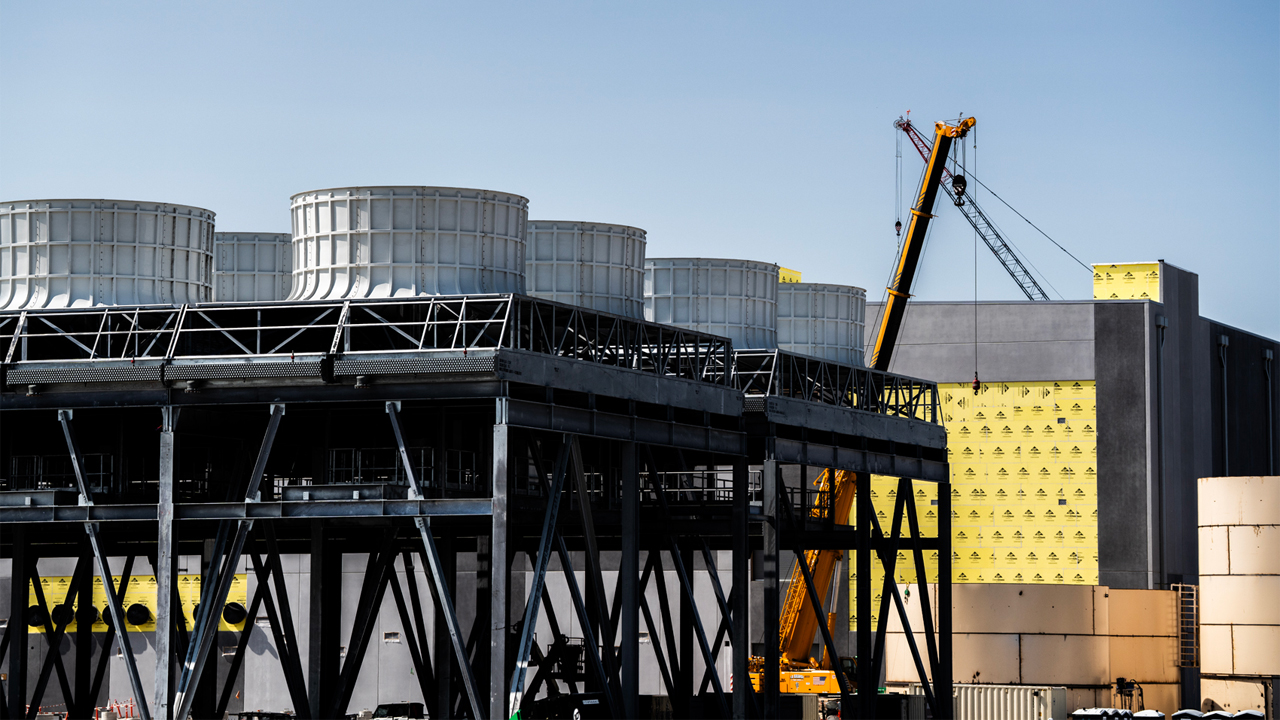
While inflation, including the higher gas prices, remains a major headwind, the U.S. economy has powered through, largely on the strength of emerging technology from the rapid growth of artificial intelligence and the massive development of data centers nationwide to serve the needs of our increasingly high-tech world, including the use of AI. Data center developments have generated massive construction projects, including projects in Mount Pleasant for Microsoft, Oracle and OpenAI in Port Washington and Meta in Beaver Dam. In addition, a huge supply chain is serving the development of these facilities, including numerous southeastern Wisconsin manufacturers that have reported increased business serving the data center industry.
But the data center developments that are largely driving the U.S. economy face a major challenge.
Communities across America, including many in Wisconsin, are pushing back in opposition to these developments as many do not want the huge facilities to be built where they live, and concerns have been raised about the massive energy demands for these facilities and how that demand will be met. Other concerns raised have included water usage and noise generated by the facilities.
Also contributing to opposition to the data center developments is a general concern many have about the impact that AI will have on the U.S. economy and the possibility that it will eliminate the need for some workers.
If data center development is slowed significantly, as many desire, what impact will that have on the U.S. economy? What then does the U.S. economy have to hang its hat on?
To examine those questions and more, and to assess the state of the U.S. economy mid-year, BizTimes Milwaukee editor Andrew Weiland conducted a Q&A with Brian Jacobsen, chief economist of Brookfield-based Annex Wealth Management, to gain insight on where things stand and what to expect for the remainder of 2026.
BizTimes: What’s your overview of the current condition of the U.S. economy?
Brian Jacobsen: “Resilient. It has defied expectations. Many people thought the oil price shock would not only create an inflation surge, but also destroy growth. Instead, things weren’t as bad as feared. We had job creation increase and consumer spending hold up. Much of the consumer strength was from shuffling around budgets, filling gas tanks instead of bellies, but now that gas prices are heading in the right direction, the budgets should be under less stress.”
Brian Jacobsen
What impact are you seeing from the national boom in data center development, including some big projects in Wisconsin?
“Hyperscaler investments are transforming communities around the country. The initial buildout is rippling through the supply chain from power, cooling, switchgear, to construction. Longer term, they may not create many permanent jobs as they have very low employment requirements per square foot compared to other developments. They also are highlighting how there’s a need for more electricity generation and better distribution.
“In addition to the data center construction, there’s the demand for the chips and memory that go into the computing power. Apple, Microsoft, and Sony have already raised prices because of the high cost of these inputs into many consumer electronics. The inflationary effects may not be as severe as from high gasoline prices, but they are not to be ignored.”
Several Wisconsin companies that contribute to the supply chain for the data center projects have reported a boost in their business. But now we are seeing a tremendous pushback, locally and nationally, to data center developments. Are you concerned that could slow data center development and ultimately take some wind out of the sails for the U.S. and Wisconsin manufacturing sector?
“Local and national pushback regarding immense power and water consumption is very real. While this friction will undoubtedly slow down permitting and stretch project timelines, it will not kill the boom. Hyperscalers are in an arms race; they are already pivoting to solutions like behind-the-meter power generation to bypass grid constraints. Wisconsin manufacturers supplying these components will remain busy, even if individual project timelines get extended.”
Change in U.S. and Wisconsin Real GDP
Credit: U.S. Bureau of Economic Analysis
What impact is AI having on our economy right now? Is it positive or negative? Any chance we are in an AI economic bubble similar to the dot-com bubble?
“AI is currently having a net-positive impact by driving immense capital investment and boosting worker productivity. While there are parallels to the dot-com era in the sheer volume of capital being deployed, there is a key difference: today’s investments are grounded in highly tangible, physical infrastructure (GPUs, cooling systems, power grids) that businesses are actively utilizing, rather than speculative web traffic. During the dot-com bubble, most of those businesses didn’t have profits, but the firms that are funding the current AI buildout are immensely profitable. We will have to see how long that lasts as costs increase, though. Most of the productivity gains may be tentative as well. A key consideration is whether there is excessive build-out of capacity. During the dot-com bubble, firms laid fiber optic cable with a ‘Field of Dreams’ rationale: if they build it, they will come. They overinvested, overspent, with lots of leverage, and then had to cut prices. That was the doom loop. We’re vigilantly watching for a similar dynamic, but it doesn’t look systemic yet.”
If the data center and AI boom run out of steam, for whatever reason, does that put U.S. economic growth at risk? What else does the economy have to hang its hat on right now?
“If the AI and data center buildout were to stall, the economy would have to lean on its traditional backstops. Right now, it can hang its hat on resilient consumer spending and a tight labor market that is keeping wages relatively stable. If we shift from AI plus consumers to only consumers, that’s still not a bad foundation. Even if AI spending falls, we could see a hand-off to other business investment as there are a lot of tax incentives to invest in property, plant and equipment. Right now, AI spending is getting all the headlines, but there is a lot of spending taking place to upgrade equipment across industries.”
Higher gas prices during the war with Iran have been a big factor in recent inflation, which rose to 4.2% in May and dropped to 3.5% in June. What do you expect to happen with gas prices for the rest of the year?
“The shipping blockade is the primary reason headline inflation spiked. As the Strait reopens, the risk premium on oil drops. Futures markets are pricing things to suggest crude and retail gas prices can retreat significantly in the second half of the year. Gasoline prices may not fall as much as oil prices because there is a lot of transportation, refining and distribution that separates oil prices from the price at the gas pump.”
Year-over-Year Change in Consumer Price Index
Note: October 2025 data unavailable due to funding lapse
Credit: U.S. Bureau of Labor Statistics
Another issue has been President Trump’s tariffs. What impact are tariffs still having on inflation?
“The initial inflationary shock and feed-through effects from President Trump’s tariffs were felt earlier in the year, but that impact is now fading. Moving into the second half of 2026, tariffs should exert far less upward pressure on consumer prices than the recent geopolitical energy shock. After the Supreme Court ruled many of the Trump tariffs illegal, the Trump administration replaced them within hours with capped, temporary tariffs under a different statute, which (at press time were) set to expire this month unless extended. Now the administration is pursuing more targeted tariffs on certain products and certain countries. Those will take longer to implement, so we could see some of the tariffs come back in waves. Those waves should have much lower peaks than the initial wave of tariffs in 2025.”
Overall, what level of inflation do you expect to see over the rest of the year?
“Because energy prices are expected to ease, you can expect inflation to peak pretty soon. The outstanding question is whether the energy price inflation seeps into other categories of inflation. So, there could be some lingering effects, but generally, headline inflation should move from 4.2% to something closer to 3.5%. That’s still too high, but at least it’s moving in the right direction.”
Editor’s note: Inflation dropped to 3.5% in June.
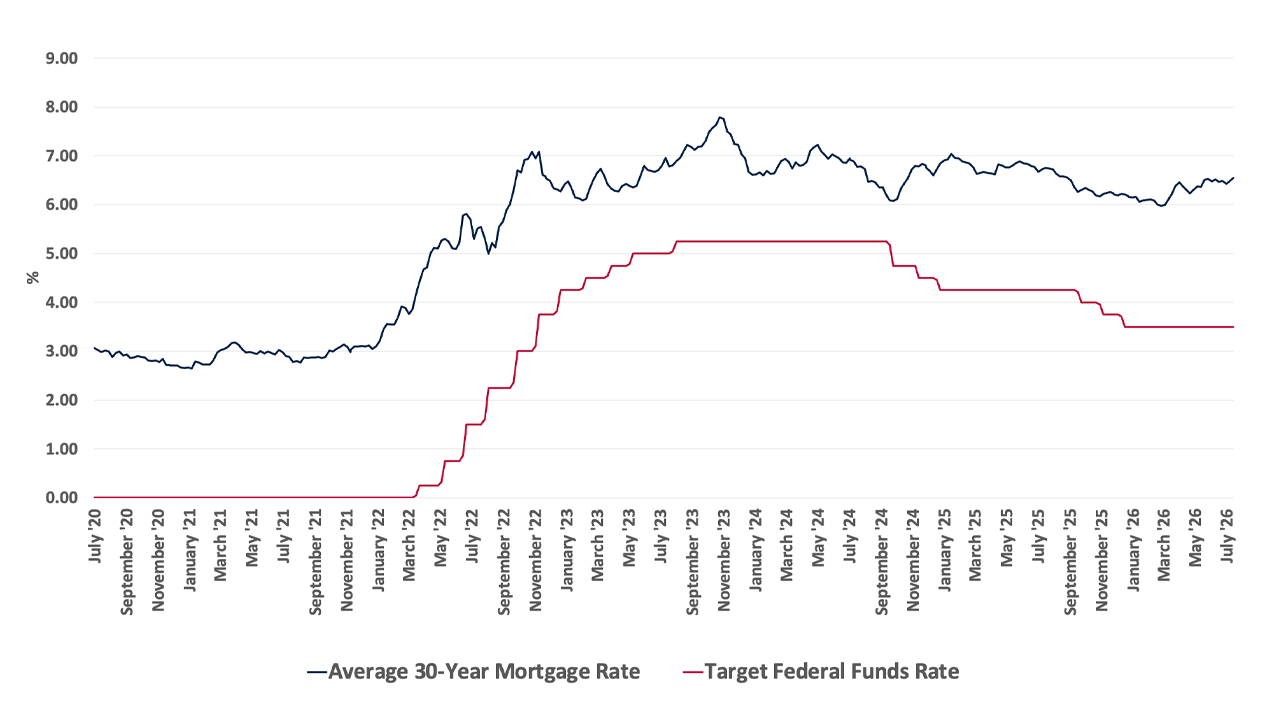
Speaking of dealing with inflation, what do you expect the Fed to do during the rest of the year with interest rates? So far in 2026, the Fed has held steady. Will that continue? Is new Fed chair Kevin Warsh going to take the Federal Open Market Committee in a different direction?
“I don’t expect cuts, but I also don’t expect hikes. There are too many conflicting factors pushing inflation around that doing nothing might be more prudent than doing something they later regret. Warsh is taking the FOMC in a distinctly different, lower-profile direction, but that might not mean changing policy. He is standing up task forces to deal with important issues, but that will be a process. While he might prefer to really shake things up quickly, he is taking a more measured approach. Changing the direction of the Fed is going to be more like changing the direction of one of those vessels in the Persian Gulf than changing the direction of a speedboat.”
Interest rates
Credit: FRED, St. Louis Federal Reserve
All things considered, how do you think the American consumer is holding up?
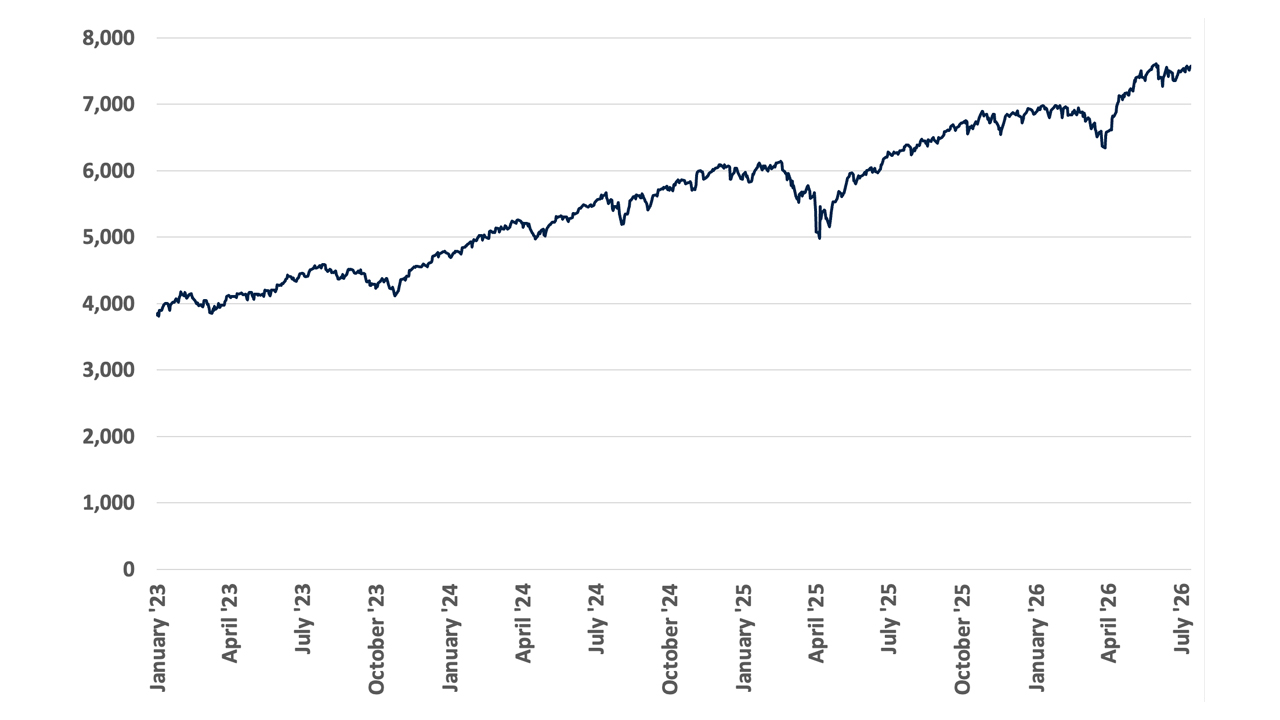
“We are seeing a bifurcated consumer base. Lower-income consumers are feeling a severe squeeze as slowing wage growth collides with 4%-plus inflation (3.5% as of June), especially since a greater portion of their spending is at the gas pump and grocery store than upper-income consumers. Conversely, middle- and upper-income consumers are holding up well even if they aren’t feeling good about it. Three consecutive years of stock market gains and robust home equity are helping asset owners feel better about their finances than those without assets.”
What condition is the U.S. labor market in and how will that play out over the second half of the year?
“The U.S. labor market is likely to start cooling, but it has been doing well since the big drop in net job creation in February. The June Employment Situation report showed a soft, but still decent, 57,000 job gain, with prior months revised lower, yet the unemployment rate actually ticked down to 4.2% because fewer people are participating in the labor force. Strict immigration policies are limiting labor force growth, so the economy doesn’t need to create as many jobs as in the past to keep the unemployment rate stable. June was a case in point. More of the same is probably the best guess for what’s ahead.”
What’s your prediction for U.S. GDP for the rest of the year?
“GDP growth will probably cruise above trend for the year. Consumer spending growth is at cruising altitude, but it’s business investment spending that has been pushing growth higher. That could experience an air pocket if rising chip and memory costs dampen data build-out demand, but it wouldn’t be surprising to see GDP for the year come in at 2.2%.”
Performance of the S&P 500 since 2023
Credit: FRED, St. Louis Federal Reserve
How about the stock market? What’s your outlook there for the remainder of 2026?
“The easy answer is to say, ‘cautiously optimistic.’ On average, being optimistic has been a winning strategy, but in any given quarter or year, you can have negative numbers or drawdowns. Cautiously optimistic sounds better than being recklessly pessimistic, especially when equities have been supported by very strong earnings growth. If energy prices fall as expected and the Fed maintains stability without aggressive unexpected hikes, the market should hold its ground through the end of 2026. Valuations, like price-to-earnings, may be high, but there are no magic numbers where if they cross that line they need to abruptly change. Generally, better earnings lead to higher valuations. Conversely, worse earnings lead to lower valuations. That’s why market swings are much more extreme than swings in the fundamentals.”
Any chance the economy takes a turn into a recession?
“A near-term recession is unlikely. Business as usual is a reasonable baseline expectation. I’d be more worried if I saw a pervasive increase in pressure on corporate profit margins. There are things to watch out for, but nothing right now that makes me think a recession is right around the corner.”
Anything I’m missing that you’d like to add?
“The economy and the market have been defined by one shock after another since the pandemic. The coast is never clear, and it is a testimony to the adaptability of businesses and resilience of consumers that growth has continued despite these shocks.”
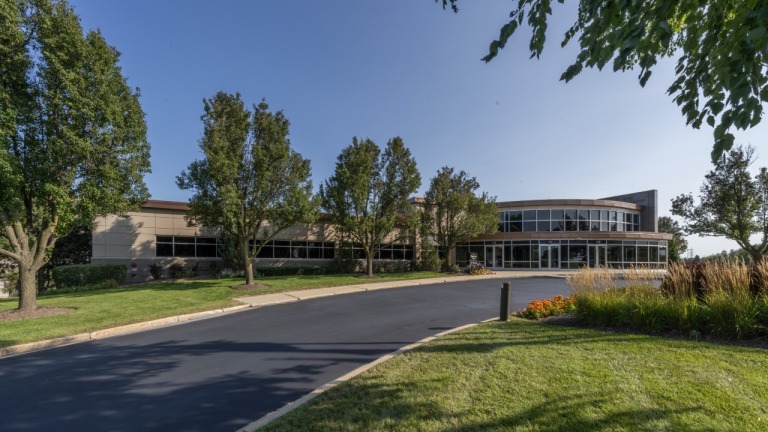
Credit: Kenny Yoo Microsoft is constructing its $7.3 billion campus at a site northwest of 90th Street and 1st Street/state Highway 195 originally intended for Foxconn.
Elizabeth Morin is a writer based in Virginia Beach. She is passionate about local sports, politics and everything in between.
Have any Virginia Beach-related news published on our website? Email us at admin at thevirginiabeachobserver.com.