Picture the perfect version of a family business succession story. An entrepreneur goes out on a limb to start a new business. Their family grows as the company grows. Eventually, the founder is ready to retire, and a son or daughter is ready to step into the CEO role.
The second generation leader, drawing on a wealth of knowledge passed on from their parent and the energy and new ideas that come with youth, takes things to new heights and the business reaches a level of success the founder never imagined.
In an ideal world, this process might repeat generation after generation for a family-owned business.
The reality, however, is much different.
While 61% of family businesses have at least one family member interested in stepping into the top job, just 23% of family businesses think the next generation is ready to step in as CEO in the near future, according to a recent Deloitte survey.
While the picture-perfect version of a family business conjures ideas of legacy, passing on values, treating employees like family members and a commitment to local communities, families are also complex and often messy, with nuances and dynamics that will challenge any leader.
Maybe the next generation is too young or not ready for the top job. Maybe the company’s complexity exceeds the skillset of the family member in a position to lead. Maybe the next generation doesn’t want to be CEO, or maybe they don’t want to be involved in the business at all. Maybe the family leader does not want to choose between multiple individuals in the next generation. Maybe the family makes the intentional choice to own the business but not operate it.
It is not hard to find examples representing the variety of different potential outcomes for family businesses throughout southeastern Wisconsin.
Milwaukee-based Perlick Corp., a maker of refrigeration and bar equipment, went through three different non-family CEOs from 2012 to July 2025, when TJ Perlick Molinari stepped in as CEO.
Leader Paper Products, a Milwaukee-based maker of envelopes and stationery, is now on year seven of non-family leadership under Steve Hipp, but reaching that point required significant culture changes.
New Berlin-based industrial laundry service ITU AbsorbTech spent years planning for its first non-family CEO and made the transition in early 2025. Craig Bald, the company’s longtime chief financial officer, is 18 months into his role as CEO.
In family businesses with less than $500 million in revenue, nearly half, 46%, expect their next leader to be a professional manager, with 47% expecting a family member to take the lead, according to the Deloitte survey. At companies with more than $1 billion in revenue, expectations for a family CEO drop to just 32%.
The survey also found 75% of family businesses planning a switch to a non-family CEO do not plan to switch back.
Family business leaders and experts say there are a number of key ideas for any family business to keep in mind when making the shift to a non-family CEO: family ownership behind the decision, good governance policies and practices in place, hiring a candidate who is aligned with the family’s vision, and strong communication and trust throughout the organization.
Planning ahead
Any successful leadership transition, especially going to a non-family CEO, starts well before the search for the right candidate begins.
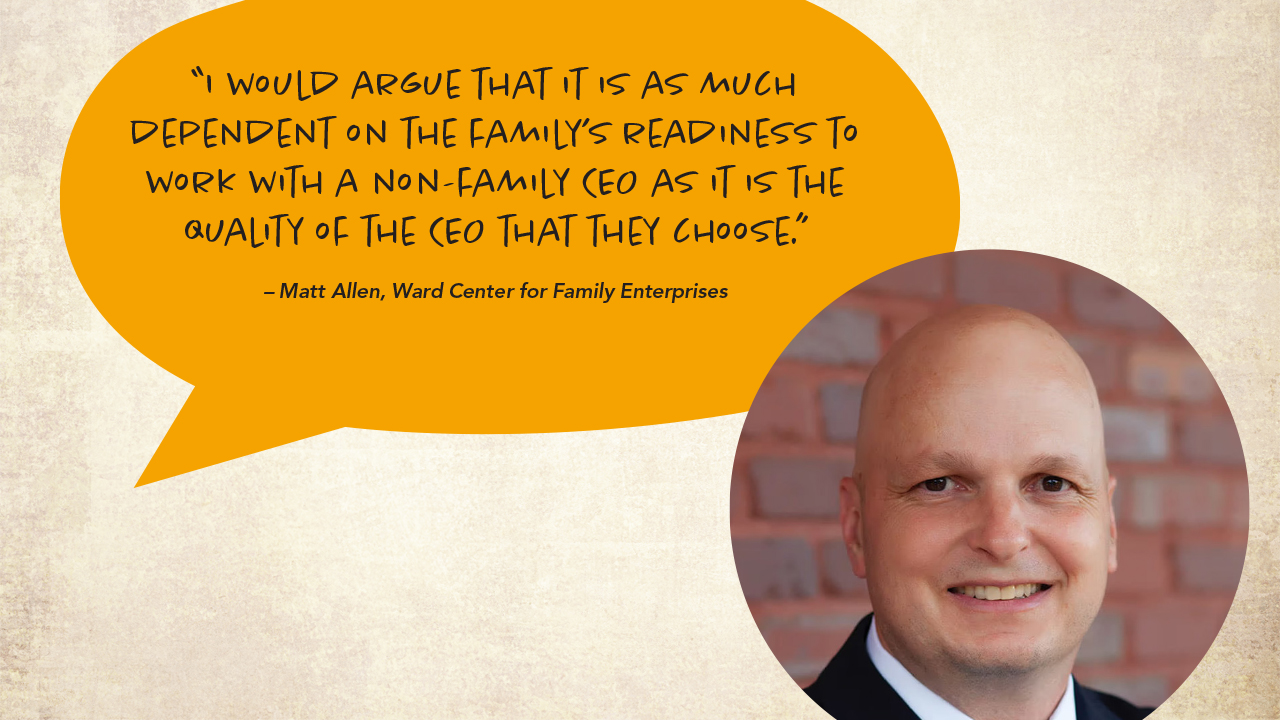
“I would argue that it is as much dependent on the family’s readiness to work with a non-family CEO as it is the quality of the CEO that they choose,” said Matt Allen, the John L. Ward clinical professor of family enterprises and executive director of the Ward Center for Family Enterprises at Northwestern University’s Kellogg School of Management.
Not having everyone on board with the transition – especially if there are shareholders or members of the next generation with their own ideas and plans – is one way to derail a transition to a non-family CEO.
“That family unity before they bring the CEO in goes a long way to not only setting the CEO up for success, but the family being successful as well,” said Sherry Herwig, director of the Wisconsin Family Business Center at the University of Wisconsin-Madison.
Hipp credited the Wilke family for working ahead of the transition to a non-family CEO by establishing a board and getting things in order for Leader Paper. Bald said going through an extensive process – including establishing a success profile, the ideal personality of the next CEO and identifying current and future business needs – to find the next leader of ITU AbsorbTech was critical.
In another world, it might have been reasonable for the company simply to tap Bald, who was then the CFO, to take over.
“I could envision that a family business would make the easy decision sometimes rather than the right decision,” Bald said.
Herwig added the family should be clear on why they are considering a switch to a non-family CEO.
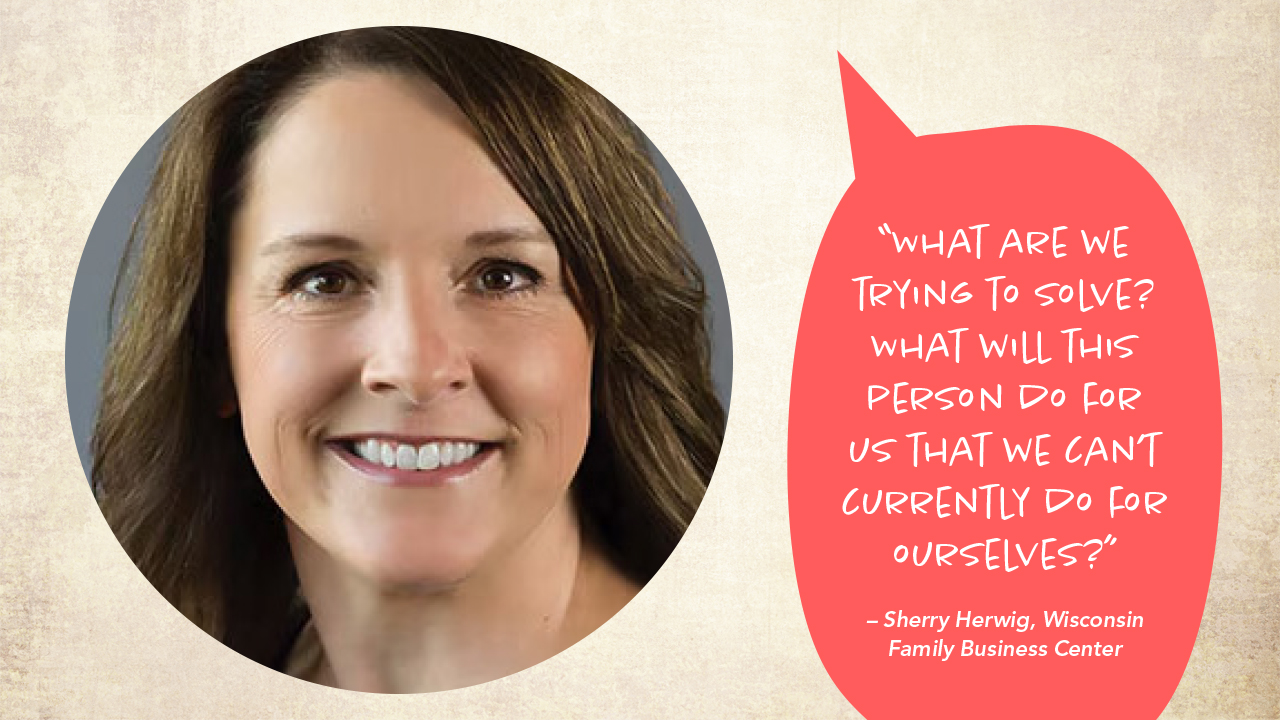
“What are we trying to solve? What will this person do for us that we can’t currently do for ourselves?” Herwig said. “I think answering that question is really, really important.”
Knowing the family and company goals can even help dictate if an internal candidate is the right fit or if the business needs a fresh set of eyes from the outside, Herwig said.
Not preparing might mean a well-qualified non-family CEO may not work out simply because the company has had decades of family leadership and never prepared for the transition, Allen said.
Governance and trust
Ultimately, having a non-family CEO relies on two things: established governance practices and trusting relationships between the CEO and family members.
“You need to have both, but I will say that in the absence of governance, it’s going to be very difficult to make the non-family CEO work at all,” Allen said.
He explained that without governance structures, everything the company does will be on an informal basis.
“To me, it’s going to be impossible for a non-family CEO to come in and understand that quickly enough to make any kind of difference,” Allen said.
“I would say both are absolutely necessary and neither one probably is adequate on its own,” Herwig said.
She noted governance structures are there to determine roles, responsibilities and decision-making authority.
“It provides structure and process and hopefully a way to sort of level set when emotions and things like that enter into the picture, which they often do and I probably would say always do in a family business, right? It is emotional. It’s personal. It’s not just a business, it is personal.”
At Perlick Corp. those advance conversations did not take place. The previous generation did not have a concrete plan for the future, but the current generation wanted to keep the business. When Perlick Molinari’s father and uncle stepped away from day-to-day operations in 2012, there was no next generation ready to run the company. Since then, each of the three non-family CEOs Perlick had didn’t work out for a variety of different reasons.
Putting it in writing
Perhaps more than other companies, family businesses are positioned to run things based on norms, traditions or just things that are remembered in one generation’s mind. Allen said it is important to get governance and management practices down in writing, but perhaps more importantly is the work of getting things written down.
“What it does is it forces the family to actually have conversations and talk about things they’ve maybe never talked about before,” Allen said.
Topics for discussion might include how involved the board should be or how much authority the CEO will have.
Allen cautioned, however, that hiring a consultant to tell the family what best practices to include in a contract will not suffice.
“That’s going to still cause some problems because even though it’s written down, what you haven’t done is gone through the process of getting the family on board or getting the new CEO on board,” Allen said.
For ITU AbsorbTech, the transition to a non-family CEO started as much as five years in advance as the board reviewed the company’s structure. Craig Bald, the company’s current CEO, said the idea was essentially to plan for when everyone on the board was gone and the next generation is in charge.
Bald said a family business may know what it wants to do, but that may not be reflected in the company’s bylaws, which may not have been updated in 30 years.
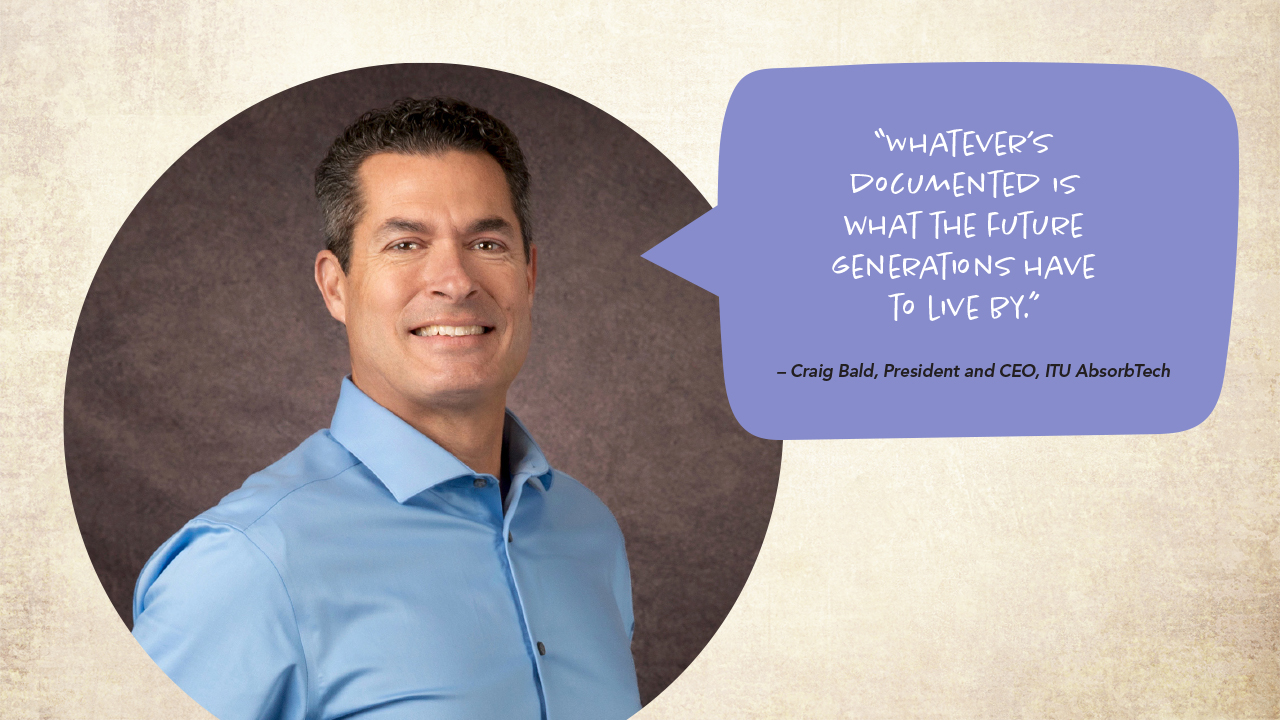
“Whatever’s documented is what the future generations have to live by,” Bald said, adding that updating the documentation helps ensure the family’s values continue and solidifies their intentions for the business.
Other changes the company made date back close to a decade, including adding outside advisors to the board of directors. Those directors – three of them at any given time – are there to bring different perspectives and ensure issues are on the table that might not otherwise be discussed. Committees for compensation and benefits and finance were also added to the board.
Establishing the CEO’s authority
Herwig said a non-family CEO should be given the full operational authority to run the business like any other CEO. That means having the ability to execute a strategy, control operations, evaluate performance and make certain financial decisions.
“That’s sometimes challenging in a family business because letting go of some of that control or letting somebody else make decisions can definitely be an area that is often challenging for family business owners because of that deep tie and commitment to the business,” Herwig said.
Bald said ITU AbsorbTech established a delegation of authority matrix that establishes what he has the authority to do, what he needs to notify the board to do and what he needs board approval to do.
“There’s a varying degree of latitude and it’s really set by the family,” Bald said. “It’s a personal thing. If the board wants to be notified of certain things, well it’s laid out and everybody’s on the same page.”
Dealing with disagreements
If family businesses are more likely to run on past practices, they’re also more likely to deal with interpersonal conflicts. Families disagreeing probably deserves a spot on the list of inevitable things in life alongside death and taxes.
The question for the family business is how those disagreements are handled.
Obviously, the type of disagreement matters. Is it something small or big? Is it tactical or about big picture strategy and vision?
Generally, disagreements within the family should be handled at the board level, Herwig said. It won’t help the business to have family members coming to the CEO to push ideas that others disagree with or that might run counter to what’s good for the company.
“That just doesn’t work,” Herwig said.
“The most important thing to understand is that the CEO is there to lead the company,” she added. “If he’s managing family disagreements or family dynamic challenges or one family member saying, ‘I want this,’ and the other family member saying, ‘You need to do that,’ that’s really not the best use of the CEO’s time or really what you’ve brought him or her in to achieve.”
Having governance and procedures in place can make a big difference in resolving disagreements, Herwig noted.
Since taking over as CEO in 2025, Bald said dealing with the unknown has been one of the biggest tasks, although that was an expected part of the process.
For example, as CFO, Bald was part of board meetings, but his communication was primarily with Jim Leef, the company’s CEO. Now that he is in the top job himself, Bald is having conversations and building relationships with all the board members.
“Everyone on the board has a different perspective, they have a different background, they have different questions, they have a different focus,” Bald said. “The communication piece there is much broader.”
He said it is not much different than stepping into any other new role and building new relationships.
“We knew the transition was going to be kind of a learning experience for everyone. We went into it with our eyes open,” Bald said.
Part of the learning curve is identifying what level of information everyone needs. Leef led the business for a long time and there are certain things he wants to know and other things he’s comfortable knowing they are being handled. Other board members want more information in other areas.
“It’s really finding that right balance that makes everybody comfortable and keeps them enough in the loop where they have the information necessary to make decisions and have a good understanding that the business is moving in the right direction,” Bald said.
He added that it took about a year before he felt like the communication was “really dialed in.”
Managing family employees
Family members working in the business is one area ripe for potential disagreements, or at least challenges.
One of the reasons is the family member can wear several different hats. They may be a current or future shareholder, they could be a board member, they could be part of management and report to the CEO or work several layers down in the organization.
For the CEO, this arrangement is full of potential challenges. On any given day, the family member might report to the CEO, but also have direct or indirect influence on the board, which is tasked with accountability for the CEO.
“You need to come up with a common agreement between family and non-family that we’re going to have open conversations,” Allen said, describing the CEO going as far as asking the family member if they are speaking as an employee, shareholder or board member. “That’s where CEOs who come from or understand family businesses, they’re going to be much better prepared for that kind of complexity.”
“The different hats, you just can’t govern those hats away. Instead, you just need to be open and willing to have the conversation,” Allen said.
Herwig said it is also important to have an employment policy for family members in place and to draft it proactively versus waiting until an issue comes up. She acknowledged some families may opt for a stricter policy and others will have looser guidelines.
“Just having that policy in place, I think, is really important,” Herwig said.
Addressing how family employees are treated before the non-family CEO comes on board is another area where companies can set up the transition for success, she added.
“If a family member thinks that they’re above the CEO or can go around the CEO or doesn’t trust the CEO or feels like they know better, again, really having that CEO be successful is going to be a challenge,” Herwig said. “It really comes down to, again, the family unity, the family agreement, the family values, the family conversations of what does this mean for our business and how are we going to approach it and what is our mindset as a family in terms of the situation.”
Finding the right candidate
Spending years establishing a strong board and governance procedures can set a family up for a successful transition to a non-family CEO, but the family still must find the right candidate.
Setting aside the family dynamics that compounded the company’s challenges, Perlick Molinari said the hiring process for each of Perlick’s CEOs suffered from a lack of due diligence.
“We were too quick to hire,” he said. “We didn’t go through a robust process, and we didn’t see the signs.”
Perlick Molinari said talking to a few people would have surfaced issues that might have changed the company’s hiring decisions.
“You find out from the broader business community because most people that are up for this kind of leadership position are not strangers to the business community,” he said. “Good leaders are well-networked and are well-known either in good ways or bad ways, and then you can make better decisions about, is this the person we want to engage.”
Allen cautioned families to consider how they go about hiring a non-family CEO. He recounted hearing from a family that used a search firm to find a candidate. The mandate for the firm was to find the most skilled person for the role. The direction did not include nuances of how the person would interact with the family. The search firm did its job and found high-level executives, many from large, publicly traded companies with industry knowledge. From a resume perspective, it looked like a great fit.
“They had, what on paper looked like super qualified, but that person wasn’t ready, nor did they have the experience to make them ready for how the decision making really was going to work,” Allen said.
The specific situation also matters. It is not uncommon for a non-family CEO to be filling a bridge role from one generation to the next. In those cases, Herwig said it is especially important to have upfront communication and to find the right candidate.
“If somebody is coming in to lead a company, they may have their sights set on a long-term opportunity as well,” she said.
While Herwig said it likely doesn’t make sense to put an exact timeline on a potential transition, the non-family CEO should have a clear understanding if there is a next-generation leader the family would like to have take over if their training and development proceeds as expected. That should also lead to a number of conversations about the non-family CEO’s potential tenure with the company, their financial compensation and expectations around supporting the development and transition.
“All of those things have to probably be really well thought out and talked about in advance,” Herwig said.
Allen pointed out that families and family businesses are often values- and purpose-driven organizations and it is important for a new non-family CEO to recognize how legacy can shape decisions.
“Oftentimes, there are components of success that are woven into the fabric of the family but maybe not outwardly recognized,” Allen said.
A new CEO might come out of the hiring process with a focus on growth, expansion and customer satisfaction because that’s what the family said are the primary goals. However, the family may also value treating employees like family members or having deep connections to the community.
Those dynamics might mean that something that makes perfect sense financially – like saving a significant amount of money by moving production to a new geography – is something that the family will not support.
It is also possible that what the family wants and what the business needs are two conflicting things.
“It’s really that CEO’s job then to figure out, how do I translate the family values, the legacy, the vision, in terms of how can we operate as a business to honor that and uphold that, but also make business decisions that positively impact the bottom line of the company, which, again, is what they’re really brought there to do,” Herwig said.
Nailing the transition
When it comes to actually making the transition to a non-family CEO, Allen said an internal candidate can have the benefit of already having some trust with employees.
Whether the new CEO is an internal or external candidate, Allen suggested it is good to have “a little bit longer runway” between the announcement and the actual transition. This might involve signaling that a change is going to happen or having a period where the outside CEO is part of the organization before the leader leaves.
But when it comes time to make the switch, Allen said it is important that the prior family CEO truly leaves. He explained it is too easy if the previous CEO is still around “helping” for employees to bring things to them instead, ultimately making it unclear who is really in charge.
Even if the plan is for the family member to have an ambassador-type role going forward, for the first three or six months, they need to stay away from the business completely “in order to create that room and space for the new CEO to get their feet underneath them,” Allen said.
“That current leader as they transition away has a lot of power to send a strong message,” he said.
Winning over employees
Beyond making a clean transition to a new leader, communication is important for employees throughout the organization to have a clear idea of what the change means for them. Herwig said questions about what it means for business ownership, company culture or family values will naturally come up for employees.
“That’s really up to every family and company to decide the answers to all of those questions …” Herwig said. “They don’t necessarily need to know everything but making sure that you’re sharing the appropriate information at all levels of the company can really go a long way to a smoother transition and helping that CEO come in and be successful early on, versus (later when) he or she’s also dealing with employee tension or culture disruption.”
Bald said ITU AbsorbTech made it a point to plan for how the transition would be felt throughout the organization.
“People like working for our company, they like working for a family company, they like the culture that’s here and obviously what comes into someone’s mind is, is that going to change?” Bald said.
To help address those concerns, the company brought managers and other leaders into the planning process and solicited opinions from long-term, respected employees who were not necessarily in leadership positions to get their perspectives.
Once the transition was made, Leef and Bald did some things in parallel and some things together. Leef, now executive chairman, still joins some meetings and comes to quarterly events.
“As much as things change, much also stays the same,” Bald said. “You want to continue the positive aspects that everybody sees, and you want to advance other things … if you make a big change and a big shakeup, you’re going to lose a lot of that momentum that the company has.”
Steve Hipp made a point to not make any major changes during his first six months as CEO of Leader Paper. That time was for him to learn the company’s culture and get to know the business.
“But then pretty quickly it switches,” he said. His mindset became one focused on why he was hired in the first place, to manage and grow the business.
“With that can come some tough decisions, but you’ve got to get to that point where there’s a reason you’re there and that’s to help the family grow the business.”
The tough choices come at both the board and ownership level as well as within the company.
At the family level, it included what Hipp described as “one of the scariest conversations of my career.”
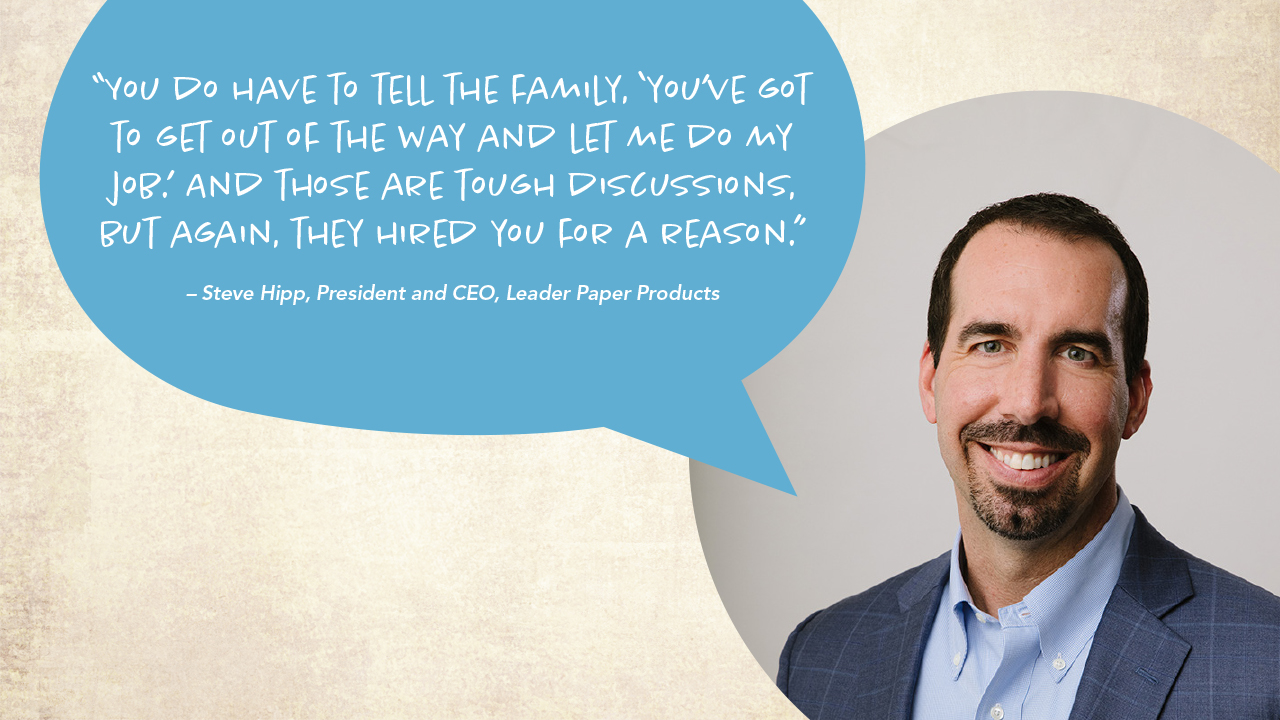
“You do have to tell the family, ‘you’ve got to get out of the way and let me do my job,’” Hipp said. “And those are tough discussions, but again, they hired you for a reason.”
Within the company, Hipp saw the need to break down cultural siloes and push the business away from accepting declining sales as the norm for the industry. He made it a point to learn all of the employees’ names within the first two weeks and to be a regular presence on the production floor. He also started holding one-on-one meetings with the leadership team along with regular huddle meetings with the whole company to discuss performance, quality and safety.
There were some leaders who dug their heels in on the old way of doing things and others who saw his presence on the shop floor as infringing on their territory. Many of those individuals are no longer with the company. Hipp said parting ways with some people required him to run the decision past the board, but as long as he had his facts and reasons in place he found support for the decision.
Hipp was also conscious of the fact that Leader Paper had a reputation for great customer service when he took over.
“There wasn’t anything broken according to the customer’s view,” he said, noting he made a point to not mess with that advantage.
When does it not work out?
Perlick’s non-family CEOs did not work for a variety of reasons. Perlick Molinari tracks the family’s issues back to disagreements over succession and acknowledges he played a role in perpetuating the challenges.
Despite all the ups and downs, Perlick Molinari continued to work to find a path forward. One reason is financial, he has an interest in seeing the company succeed. But there’s also a piece that is about the legacy of the business.
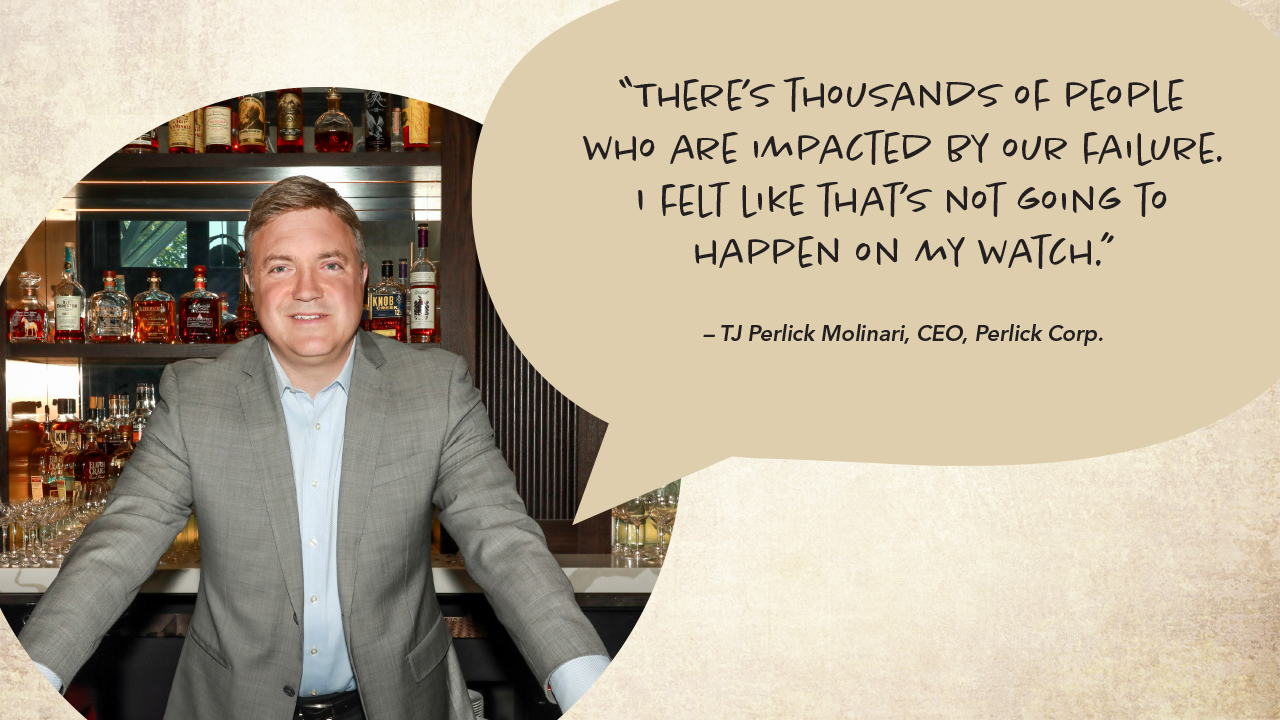
“I owe it to all the people at the business and all the people who are in the channel who rely on us,” he said. “There’s thousands of people who are impacted by our failure. I felt like that’s not going to happen on my watch.”
For Perlick, it’s not that the family wasn’t working to make improvements along the way. It was only after getting outside help to work through family issues and addressing them head-on that the company has been able to move on. Although there have been periods in the past when the family thought they had the right governance and trust in place.
“Thinking they’re there and them being there are two totally different things,” Perlick Molinari said. “We thought we had most of these issues resolved and we didn’t, so it led to more pain and suffering than you need to endure, and financial losses.”
In general, Allen said one of the most common reasons for a non-family CEO transition to fail is if one or both sides is uncompromising or unbending in their approach.
Imagine a new CEO – excited about the job with lots of new ideas – runs into concerns from the family. Instead of trying to understand the issue, they press ahead, flexing their leadership muscle instead of being willing to learn or compromise.
Or maybe the family completes a search, finds someone who does a great job, but family members are uncomfortable with having less influence or transparency than they had in the past. They might start making demands through the board or limiting the CEO’s authority and taking away freedoms required to do the job.
“Either of those situations can undermine the process,” Allen said. “But when you have both, when you have a very rigid family and a very rigid new CEO, you can imagine that that’s just worst-case scenario, right? You’re never going to overcome it because both groups are going to be butting heads and jockeying for position.”
Author
-
 View all posts
Elizabeth Morin is a writer based in Virginia Beach. She is passionate about local sports, politics and everything in between.
Have any Virginia Beach-related news published on our website? Email us at admin at thevirginiabeachobserver.com.