As the Milwaukee Reading Coalition continues to seek a pathway to combine public and private dollars in support of citywide literacy work, its funding may need further approval from the state legislature, according to the Department of Public Instruction’s most recent update to the group.
Last month, Milwaukee Mayor Cavalier Johnson urged DPI to invest Act 20 literacy funding — allocated in 2023 — in the coalition’s planned Milwaukee Reading Commission, arguing in a May 18 letter that Milwaukee’s reading crisis requires a sustained, community-wide implementation strategy that needs public dollars to efficiently use the private funding the coalition has already secured.
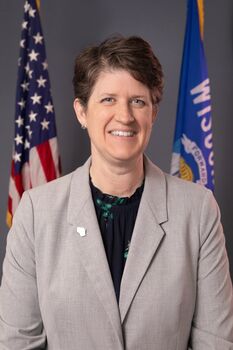
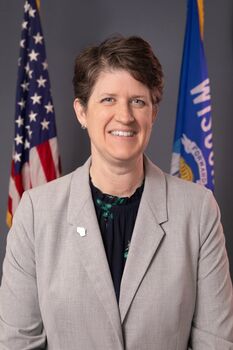
Credit: Wisconsin Department of Public Instruction Jill Underly
State Superintendent Jill Underly responded May 26, saying that while DPI supports the coalition’s goals, Act 20 limits how the department can distribute funding.
“As you are likely aware, the development of Wisconsin’s science of reading legislation required (DPI) to engage in lengthy negotiations with the governor and legislative leaders to outline policy changes and funding for schools,” Underly wrote. “…The legislature did not authorize the DPI, or any of its partners, to forward fund a program like the Milwaukee Reading Commission is describing.”
The Milwaukee Reading Coalition, however, argued in a June 1 letter that DPI had previously indicated it had sufficient authority to support the commission without additional legislation.
The coalition said it had shared draft legislation with DPI in 2025 that would have explicitly authorized state support for the Milwaukee Reading Commission before ultimately dropping that effort at the guidance of DPI.
Howard Fuller
“Much earlier in this process, we were concerned that DPI might not have the authority, so we actually put together a bill that had legislative support to specify that DPI could work with the Milwaukee Reading Coalition, but we were told by Tom McCarthy, who is the state superintendent’s chief of staff, that we wouldn’t need that,” said Howard Fuller, co-chair of the Milwaukee Reading Coalition. “Based on that input, we withdrew our efforts to get a bill passed.”
Coalition leaders said they subsequently secured a fiscal sponsor through the Greater Milwaukee Foundation, raised philanthropic seed funding, selected commissioners to oversee the initiative and recruited an executive director.
In a June 19 letter, Underly said the department has opened both the instructional materials reimbursement program and the statewide literacy coaching program established under Act 20 and now has preliminary estimates of remaining funding, which is the funding that the Milwaukee Reading Coalition could be in line for.
“To that end, we have crafted ideas we plan to share with the Legislature to be able to use underspent funds,” Underly wrote.
In a statement provided Thursday, DPI said approximately $19.7 million remains available after accounting for $6.6 million already distributed and $10.8 million currently being processed. The department emphasized that those figures could change as another round of curriculum reimbursement grants is awarded and additional instructional materials are approved. Allocating that funding to the Milwaukee Reading Coalition would require a “detailed implementation plan and approval that includes a legislative process. MRC is explicitly aware of all these challenges,” DPI said.
“Our priority is ensuring resources provided through Act 20 are fully and effectively implemented to support students across Wisconsin,” DPI said. “If resources remain available after those requirements are met, the DPI is open to exploring innovative, transparent and accountable approaches. We will continue to seek partnerships that can help kids learn to read and close persistent opportunity and achievement gaps. A delay is not a denial when it comes to implementing this law.”
Still, Fuller said he does not view additional legislation as necessary to funding the Milwaukee Reading Coalition.
“We have urgent reality in Milwaukee,” he said. “We’ve built this tremendously broad coalition and, from our standpoint, we don’t see the need to go back to the Legislature. We were told by DPI that they didn’t have to go back to the Legislature.”
DPI, the Milwaukee Reading Coalition and Milwaukee Public Schools are expected to meet in the coming weeks, according to Fuller.
“My hope is that meeting will lead to something both concrete and positive,” Fuller said.
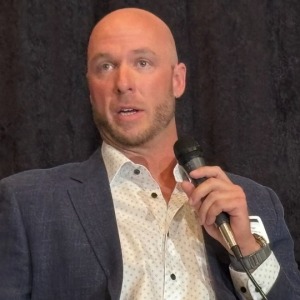
Colleston Morgan Jr., City Forward Collective
Colleston Morgan, executive director of the City Forward Collective, which is a member of the Milwaukee Reading Coalition, said the coalition hopes the upcoming meeting focuses less on the mechanics of funding and more on accelerating literacy instruction in Milwaukee classrooms.
“I worry that so much of the conversation on Act 20 has become mired in bureaucracy that we’ve lost sight of the students and the outcomes,” Morgan said.
He said the coalition was created because Milwaukee’s literacy challenges extend beyond any one school system and require a coordinated response across public, charter and private schools.
“Adult problems have stood in the way of our kids’ education in the city for far too long,” Morgan said. “This is one of the few times that the adults in this city are almost on the same page. We are unified in our perspective, and we’ve got to deal with this in terms of identifying resources to train our teachers to make sure that wherever a kid goes to school, they’re getting the effective literacy instruction and the strong care that they need for the rest of their educational career.”
Elizabeth Morin is a writer based in Virginia Beach. She is passionate about local sports, politics and everything in between.
Have any Virginia Beach-related news published on our website? Email us at admin at thevirginiabeachobserver.com.