An energized group of more than 100 people packed Milwaukee’s City Hall Wednesday morning as officials took up a proposal that, if ever realized, would shift control of the city’s electric system from We Energies to a municipally owned utility.
Credit: City of Milwaukee Alex Brower
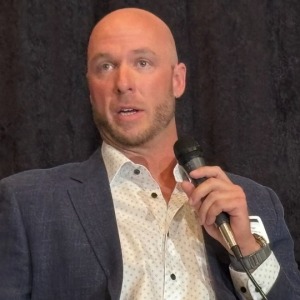
The hearing, convened by the city’s rarely used Public Transportation, Utilities and Waterways Review Board, marks the first formal public discussion of a proposal to create a municipally owned electric utility. The idea has been floated for years by progressive groups in the city, and was a centerpiece of socialist Alex Brower‘s successful 2025 campaign for alderman.
“Not only are we faced with rising prices across the board, whether it’s these landlords gouging us or Kroger shutting grocery stores down and raising prices, or whether it’s frankly our current utility continuing to raise prices again and again, the working people of this city are suffering right now,” Brower said.
Brower argued that investor-owned utilities are ultimately accountable to shareholders rather than customers.
“They may suppose and present that their first priority is to deliver electricity, but as with any company that you can trade on Wall Street, the real hidden, or maybe not so hidden priority of that entity is to deliver profits for shareholders,” he said.
Much of Wednesday’s hearing focused on how public power utilities operate and what it would take for Milwaukee to join their ranks.
Ursula Schryver, senior vice president of education, training and events for the American Public Power Association, said roughly 2,000 public power utilities serve about 15% of electric customers nationwide. While some large cities, including Los Angeles, Seattle and San Antonio, operate municipal utilities, the vast majority of public power systems serve communities with fewer than 10,000 residents.
“It’s local decision making, local control,” Schryver said. “Decisions on rates, reliability, investments in infrastructure, renewable energy, any other services that the community make are made here in the community.”
Schryver said public power utilities in Wisconsin generally have lower rates and stronger reliability than investor-owned utilities. However, she noted that forming a new municipal utility is relatively rare because the process requires significant time, money and political commitment.
We Energies did not comment at Wednesday’s meeting, but said in a statement to BizTimes that customers benefit from being part of a larger electric network that can draw on experienced crews, modern equipment and technical expertise to maintain service and respond to outages. It also said that its customer bills remain below the national average and pointed to ongoing partnerships with the city on solar projects and other clean energy initiatives.
“These benefits would be virtually impossible to replicate through municipalization,” the statement said. “We Energies has proudly served Milwaukee for more than 125 years, and we remain committed to powering this community for decades to come. …Wisconsin is experiencing more severe weather in recent years, including tornados and extreme wind. As part of a larger energy network, we can bring in experienced crews, advanced equipment and proven expertise to restore power quickly and strengthen the grid.”
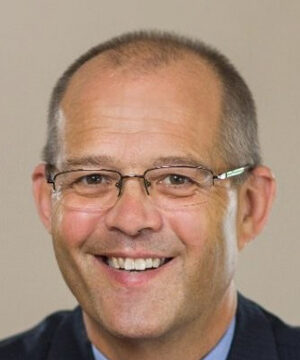
Milwaukee’s Public Transportation, Utilities and Waterways Review Board, chaired by Ald. Bob Bauman who wore an APPA hat before the hearing, does not have the authority to make any recommendation to the Common Council. Wednesday’s hearing was informational only, according to Bauman.
Brower’s proposal cites a section of Wisconsin law that allows municipalities to acquire utility systems. Under Chapter 197, cities, villages and towns can purchase utility assets, though the transaction would ultimately require approval from the Public Service Commission, which would determine compensation and other terms of the acquisition.
Kat Grant, an attorney with Madison-based Pines Bach LLP, outlined that process for board members Wednesday. Before any proposal could reach state regulators, the city would likely need to commission a feasibility study and seek approval from voters through a referendum. While a feasibility study could provide an estimate of what municipalization might cost, Grant said the final valuation would not be determined until later proceedings before the PSC.
“Cities can spend millions of tax dollars chasing this idea — Boulder (Colorado) spent tens of millions over 10 years and walked away, and Ann Arbor (Michigan) spent more than $500,000 before changing their minds,” We Energies said in its statement. “Based on estimates in other cities we believe this would cost the city (of Milwaukee) billions of dollars.”
The proposal also faces opposition from IBEW Local 2150, which represents workers who maintain the power distribution system. Sam Rozenberg, vice chair of Unit 5 of the union and a system operations dispatcher, said the city would face significant challenges assembling a workforce to operate and maintain the system.
“It is not something Milwaukee should gamble on,” he said.
Grant said concerns raised by union members over collective bargaining rights under Act 10, which limits bargaining rights for most government employees, could potentially be addressed through a third-party operating structure.
“We want every dispatcher to have a better job, we just want the CEO to not have a job,” Brower said
Brian Rogers, director of environmental justice for Milwaukee-based nonprofit Walnut Way Conservation Corp., told board members that the issue reflects larger questions of governance and equity.
“This conversation is ultimately not about electric poles and wires. It’s not about substations and transformers, utility planning and accounting,” Rogers said. “If you are paying even marginally close attention to any of us it is so clearly about democracy, most obviously about economic justice and climate adaptation.”
Bauman suggested the city could next establish a task force and issue a request for proposals for a feasibility study.
Elizabeth Morin is a writer based in Virginia Beach. She is passionate about local sports, politics and everything in between.
Have any Virginia Beach-related news published on our website? Email us at admin at thevirginiabeachobserver.com.